Update on Destreaming in the Toronto District School Board (2024)

It’s been almost 10 years since I started my whirlwind destreaming journey. What started as a small initiative with six Toronto District School Board schools serving predominantly Black students to address their overrepresentation in lower-streamed courses eventually transformed into a district-wide mandate. Soon afterwards, the Ontario Ministry of Education began destreaming all Grade 9 courses as an approach to address long-standing systemic discrimination based on race, class, and (dis)ability.

Such a fundamental change in how secondary schools organize children naturally comes with a stage of transition. While many educators are successfully transitioning towards a more differentiated approach to teaching that supports a wider range of student readiness, some educators are not. Staff that are struggling with this transition are reporting a lack of resources and funding towards effectively implementing destreaming. While teachers seem to be “getting by,” I agree that more resources are required for staff to feel more confident and less stressed about meeting students’ needs in inclusive classes.

But, there is a sentiment amongst some educators and community members that destreaming is not working. Staff that are having difficulty meeting diverse learners’ needs are sharing their experiences of students failing classes or having to lower their expectations, which leads to underpreparedness for future learning. I empathize with teachers and school administrators that feel they are not receiving the time, resources, and support they need in order to do their best work. However, to assess the impact of destreaming as a whole, it is critical to examine system-level data to layer on top of our own personal experiences.

That is why I’m sharing a portion of a recent report that I co-wrote, entitled Academic Pathways Strategy: Supporting Students from Kindergarten to Apprenticeship, College, University, and the Workplace. This report, published in September 2024, provides an historical overview of what the TDSB has done with respect to destreaming, a current assessment of destreaming efforts district-wide, and what steps the district will be taking to maintain the highest expectations for students while continuing addressing educational barriers for Indigenous, Black, and disabled students, and students from lower socioeconomic backgrounds.

To read the original report, go to Page 79 of this document (the portion below includes some minor grammar and citation edits and the addition of links).


Academic Pathways Strategy: Supporting Students from Kindergarten to Apprenticeship, College, University, and the Workplace

History of Addressing Academic Streaming in the TDSB

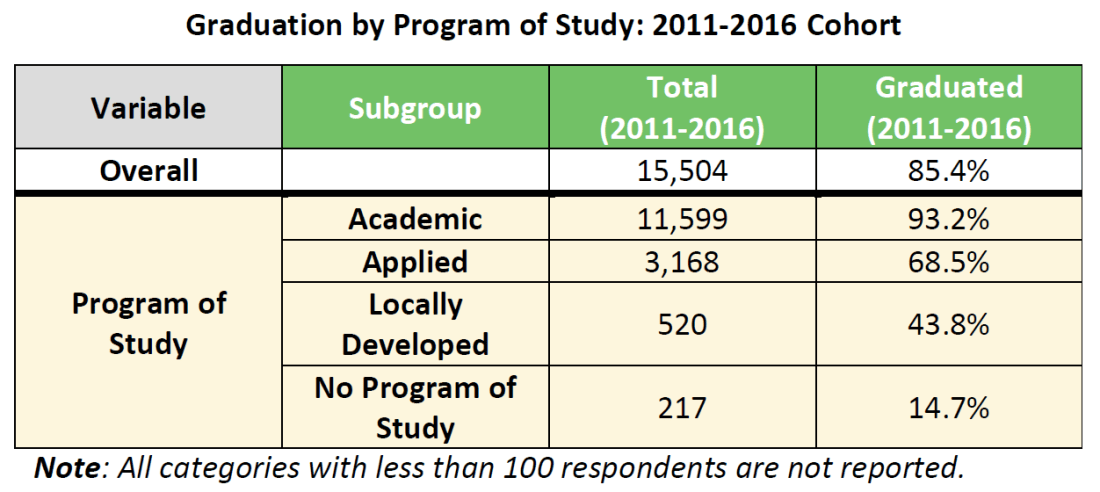
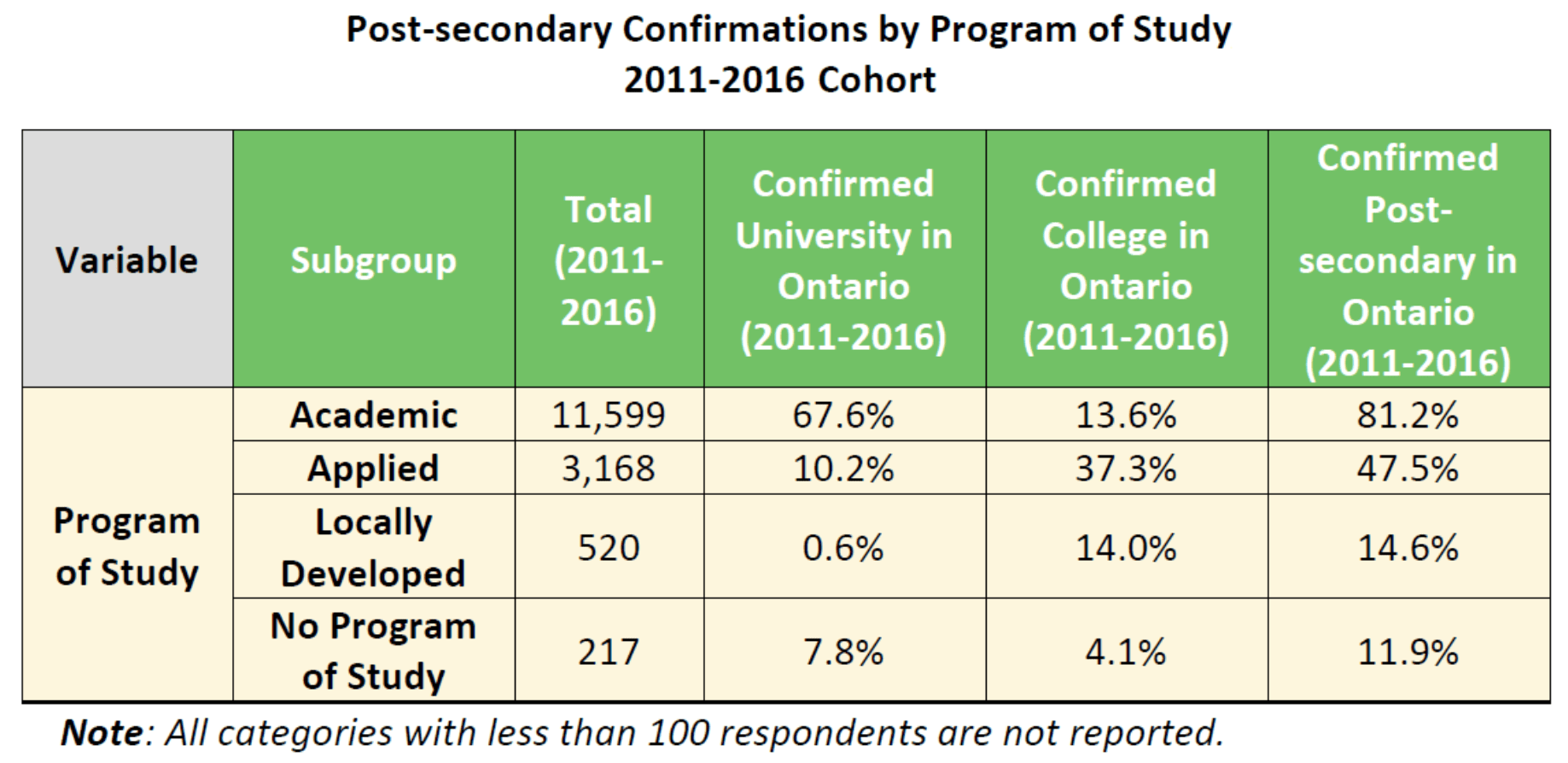
Academic streaming is the process of separating students into distinct educational pathways based on perceived ability. Since 1999, Grade 9 students have been placed in either the Academic or Applied course stream. Academic courses in Grades 9 and 10 serve as prerequisites and a foundation for university-preparation and college-preparation courses in Grades 11 and 12. Applied courses, however, generally only serve as prerequisites for college-preparation courses and Workplace options in the senior grades.

Therefore, Academic courses provide students with pathways towards all post-secondary educational destinations (i.e., university, college, or apprenticeship), whereas Applied courses prepare students for college, apprenticeship and workplace programs but courses do not qualify for university entrance.

TDSB is a leader in equitable and inclusive education, specifically in regards to investigating the impact of academic streaming. From 2013 to 2017, numerous reports were published that identified key effects of academic streaming. Structured Pathways (Parekh, 2013), showed that enrollment in Applied courses was associated with poorer academic achievement, higher suspension rates, higher dropout rates, and lower rates of acceptance to post-secondary education compared to enrollment in Academic courses. In addition, this report illustrated that students who are Black and Indigenous, students from lower socioeconomic backgrounds, and students with special education needs were disproportionately placed in Applied courses.

Sifting, Sorting and Selecting (TDSB, 2015), utilised these data profiles to create a working document and a series of professional learning sessions to school administrators and teacher leaders from four secondary schools and three elementary feeder schools in neighbourhoods with high numbers of Black families and with low socioeconomic status. It culminated with staff voluntarily committing to “destream” in at least one Grade 9 subject by eliminating the Applied course option and running “Academic-only” programming. Results after the first year indicated gains in academic achievement through measures including report card mark averages and achievement on EQAO assessments.

The success and impact of Sifting, Sorting & Selecting led to the creation of a similar series in 2017, titled Restructured Pathways, that expanded participation to 16 secondary schools and 47 elementary schools. In addition to examining streaming in secondary schools, elementary staff focused on the Home School Program (HSP) as a form of streaming. HSP was designed to support students with special education needs by providing a smaller class setting for at least 50% of the day for timed and tiered intervention., TDSB research found that students from racialized and low socioeconomic backgrounds were disproportionately placed in HSP and achieved lower academic outcomes.

Addressing academic streaming at a system-wide level was formalized through the adoption of the TDSB Multi-Year Strategic Plan (MYSP) in 2018. Goals within the MYSP included a review of the Home School Program and led to the phased elimination of HSP across the TDSB that was completed in 2022. Another goal in the MYSP was “to work over the course of three years to support the majority of students to study at the academic level for Grades 9 and 10.” Through a three-year phased approach, schools transitioned to providing Academic-only courses in Grades 9 and 10, culminating in the elimination of Grade 9 Applied courses in September 2021 and Grade 10 Applied courses in September 2022. During the transition period, extensive professional development on inclusive teaching was offered to teachers, curriculum leaders, and school administrators through departments including Academic Pathways K-12, English/Literacy, and Mathematics/Numeracy.

In its own efforts to address systemic discrimination in Ontario education, the Ministry of Education began destreaming Grade 9 courses across the province through the development of new curricula. Grade 9 Mathematics was the first course to be destreamed in 2021, followed by Science in 2022, English in 2023, and Geography in 2024.

Key Goals of Destreaming in TDSB

The three key goals of destreaming through Academic Pathways K-12 in the TDSB are the following:

  1. Increasing academic achievement for all students, particularly for those from historically and currently underserved groups, by elevating expectations, strengthening instructional practices, and providing appropriate supports and resources.
  2. Increasing students’ sense of belonging and engagement in inclusive and supportive classroom environments.
  3. Reducing, and ultimately eliminating, disparities in acceptance rates to post-secondary education by race, socioeconomic backgrounds, and special education status.

These goals are addressed in the action plan and associated timelines.

Destreaming in Grades 9 and 10

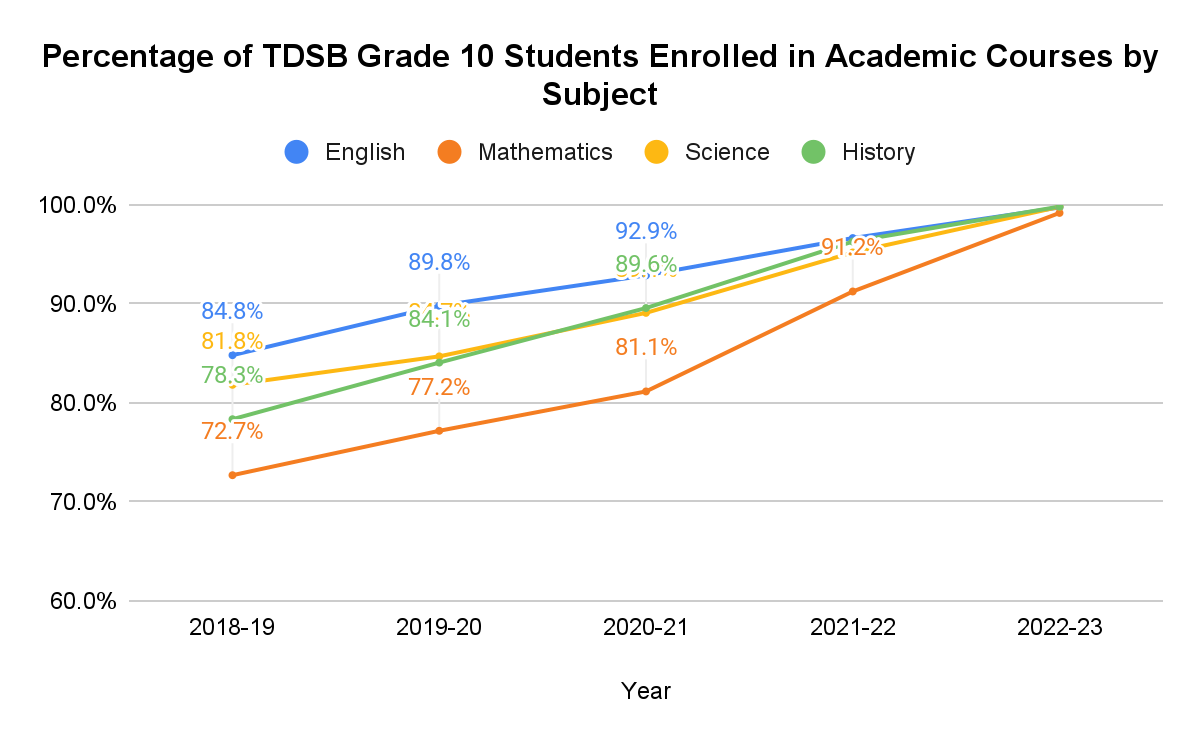
An important first step in secondary school to meet each of the goals above involves ensuring that students begin and continue to take Academic or destreamed courses. As of 2022-2023, almost all Grade 9 and 10 students are enrolled in the academic streams. From 2018-2019 to 2022-2023, there was significant growth in the proportion of students enrolling in Grade 9 Academic courses as the phased approach to destreaming was progressing.

Currently, almost all Grade 9 students in the TDSB are enrolled in either Academic (English and Geography) or destreamed (Mathematics and Science ) courses (see Figure 1). In September 2023, the new destreamed Grade 9 English course was offered, and in September 2024, Grade 9 Geography will be a destreamed course. A similar trend occurred for Grade 10 Academic course enrollment, culminating in almost all TDSB students enrolling in Academic courses in English, History, Mathematics, and Science in the 2022-2023 school year (see Figure 2), which serve as prerequisites for university-preparation courses in Grade 11.

Figure 1: Percentage of TDSB Grade 9 Students Enrolled in Academic or Destreamed Courses by Subject (2018-2019 to 2022-2023).

Chart

Figure 2: Percentage of TDSB Grade 10 Students Enrolled in Academic Courses by Subject (2018-2019 to 2022-2023).
Chart

The student data that follows below maps out key success indicators in relation to student trajectories into post-secondary education opportunities. Successful transitions from Grade 8 into a Grade 9 is critical to establishing a successful trajectory for students into their later secondary education experience. The slides below begin with a breakdown of student enrollment in destreamed courses in Grade 9 and follow with enrollment in University Level course participation in Grades 11 and 12. These two stages for secondary school students are important to monitor as they provide insights into the likelihood of successful transitions of TDSB students into post-secondary education. In early secondary school, Grade 9, schools and
system leaders need to monitor the successful transition of students within the destreamed learning environment that almost all students are now engaged.

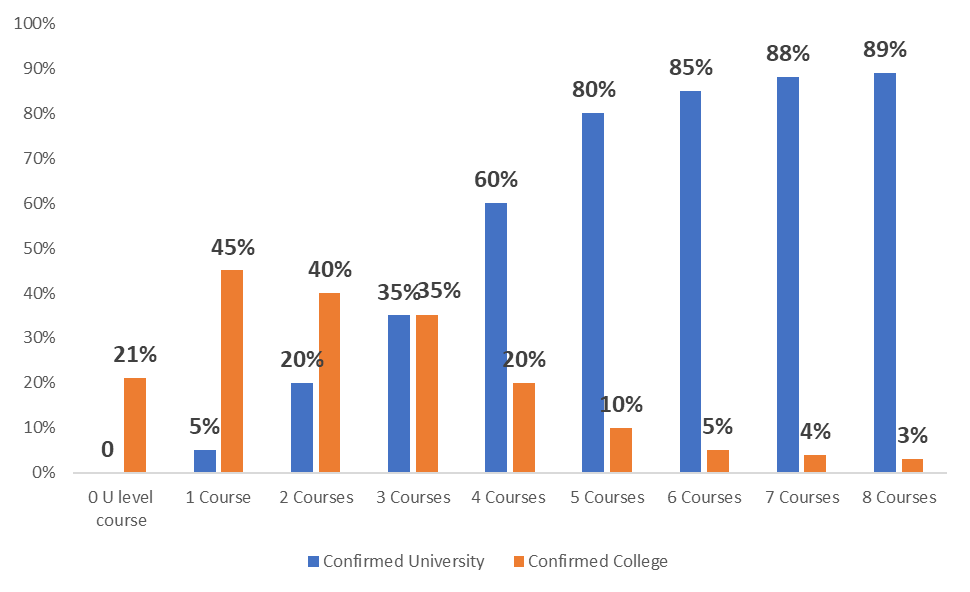
Achieving an average of 70% and above for the four academic core subjects—Geography, Science, English, and Mathematics—is a critical threshold for students in providing an academic foundation for successful participation in Grade 11-12 learning experiences (Figures 3) that in turn serve as a critical platform for postsecondary education access—both college and university.

Figure 3. Relationship between Grades 11-12 University Level Course Participation and Post-Secondary Education Opportunities (2005-2012)
Enrollment in Grades 11 and 12 University-Preparation Courses to Support Entry and Success in College or University

Increased student enrollment in university-preparation courses in Grades 11 and 12 is an important indicator that more students are prepared to enter, and succeed in, post-secondary education in college or university. Recent research has shown that among students who confirmed entry to an Ontario university within two years of graduating from secondary school, 99.8% of them completed Grade 12 university-preparation English. Also, a majority of students who confirmed entry to an Ontario college (53.0%) also completed Grade 12 university preparation English (Gallagher-Mackay et al., 2023). In mathematics, almost all students (98-100%) entering STEM and business programs have at least one Grade 12 university-preparation Mathematics course, in addition to a majority of Arts, Humanities and Social Science students (58%) (Brown, Parekh & Gallagher-Mackay, 2018). Students who take first-year college mathematics courses having completed university-preparation mathematics courses in secondary school outperformed those who completed college-preparation mathematics courses (Orpwood et al., 2012). TDSB Research has followed 129,000 students in cohorts from 2005-2012 in order to ascertain the relationship between University Level course participation in Grades 11-12 and postsecondary education opportunities of any kind. Only 21% of students who did not take one University Level course went on to any post-secondary education opportunity. However, 70% of students who took 3 university level courses of any kind went on to a post-secondary education opportunity, half of which was a college opportunity and half a university postsecondary opportunity (Figure 2).

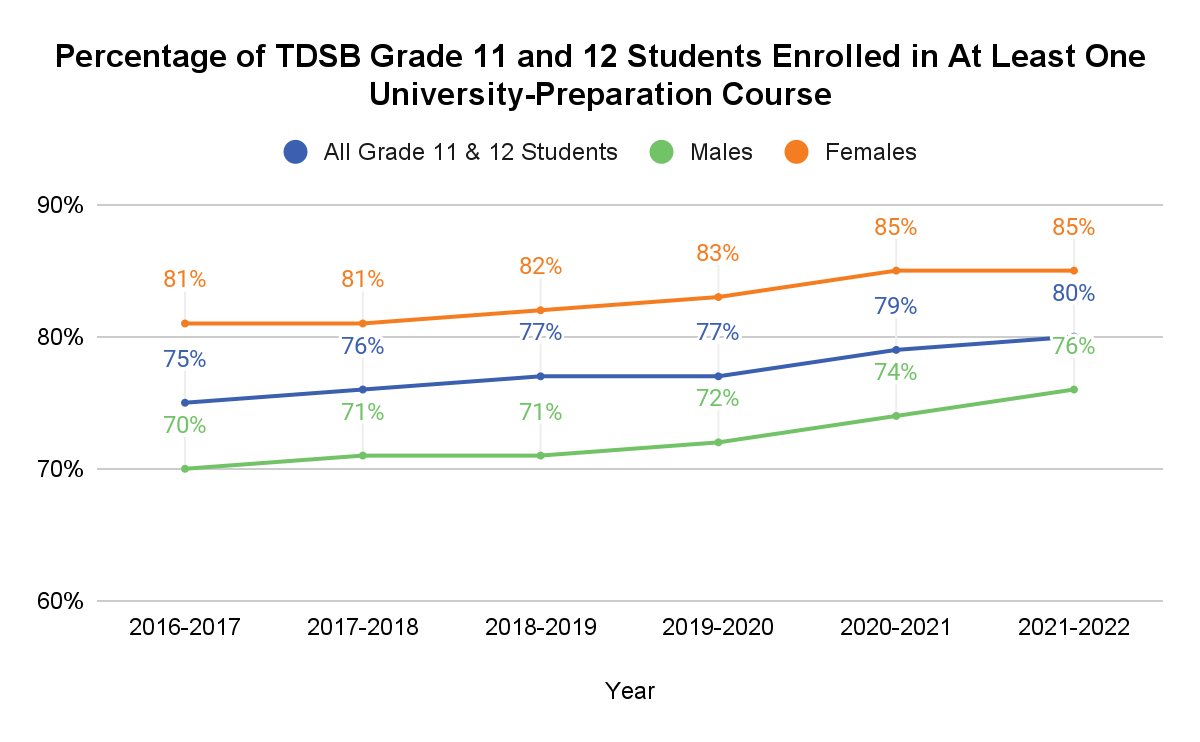
Due in large part to the destreaming efforts in the TDSB since 2015, the proportion of students enrolling in university-preparation courses has been increasing. Overall, the percentage of Grade 11 and 12 students enrolling in at least one university-preparation course has increased from 75% to 80% from 2016-2017 to 2021-2022 (see Figure 4). Historically, males were overrepresented in Applied courses (Parekh, 2013), which accounts for the disparity between males and females enrolled in university-preparation courses. However, that disparity has been decreasing over time, from 11% to 9%.

Figure 4: Percentage of TDSB Grade 11 and 12 Students Enrolled in At Least One University-Preparation Course (2018-2019 to 2022-2023).
Chart

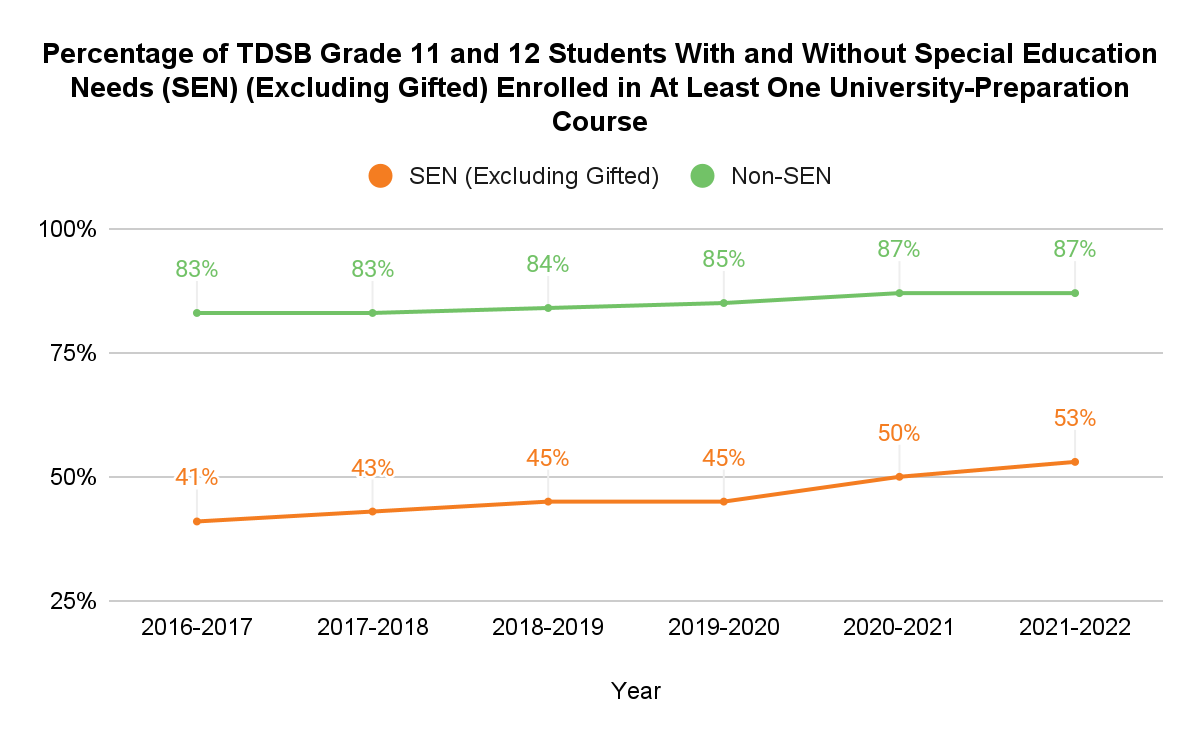
Students with special education needs (SEN) (excluding gifted) have seen large gains in university-preparation course participation during the board’s destreaming efforts. From 2016-2017 to 2021-2022, there was a 12% increase in students with SEN enrolling in at least one university-preparation course, compared to a 4% increase in enrollment for students without SEN (see Figure 5). While the disparity remains large, this is a promising trend that indicates destreaming efforts as having the desired effect of providing greater equity in educational outcomes.

Figure 5: Percentage of TDSB Grade 11 and 12 Students With and Without Special Education Needs (SEN) (Excluding Gifted) Enrolled in At Least One University-Preparation Course (2018-2019 to 2022-2023).
Chart

Increases in the rates of university-preparation course enrollment were measured across all self-identified racial groups in the TDSB. However, some groups experienced greater gains than others. Southeast Asian (15%), Middle Eastern (10%), Mixed (7%), and Black (7%) students saw the greatest increases in university-preparation course participation from 2016-2017 to 2021-2022 (see Table 1). Indigenous students, however, saw the least growth (2%) amongst self-identified racial groups and remain the group with the lowest rate of university-preparation course enrollment, indicating a clear area of focus for concerted improvement efforts.

Table 1: Percentage of TDSB Grade 11 and 12 Students by Self-Identified Race Enrolled in At Least One University-Preparation Course.

YearBlackEast AsianIndigenousLatina/o/xMiddle EasternMixedSouth AsianSoutheast AsianWhite
2016-1760%90%37%63%72%75%86%67%82%
2017-1862%91%37%63%74%78%87%71%83%
2018-1964%92%38%66%76%78%87%72%85%
2019-2062%93%36%68%77%77%87%73%85%
2020-2163%94%34%66%82%79%89%78%86%
2021-2267%95%39%69%82%82%90%82%87%
6-year change+7%+5%+2%+6%+10%+7%+4%+15%+5%
*Please note, Indigenous student proportions on this chart may not be reliable as self-identified Indigenous students and communities are significantly underrepresented due to historical and current relations with the Canadian government and colonialism in general. Equally, there is a distinction between approaches to equity in relation to racialized students who are marginalized and sovereignty affirming First Nation,Metis,and Inuit students that is not clearly articulated within data tables. The groups are included together here for purposes of representation of all students.

Applying and Attending College or University

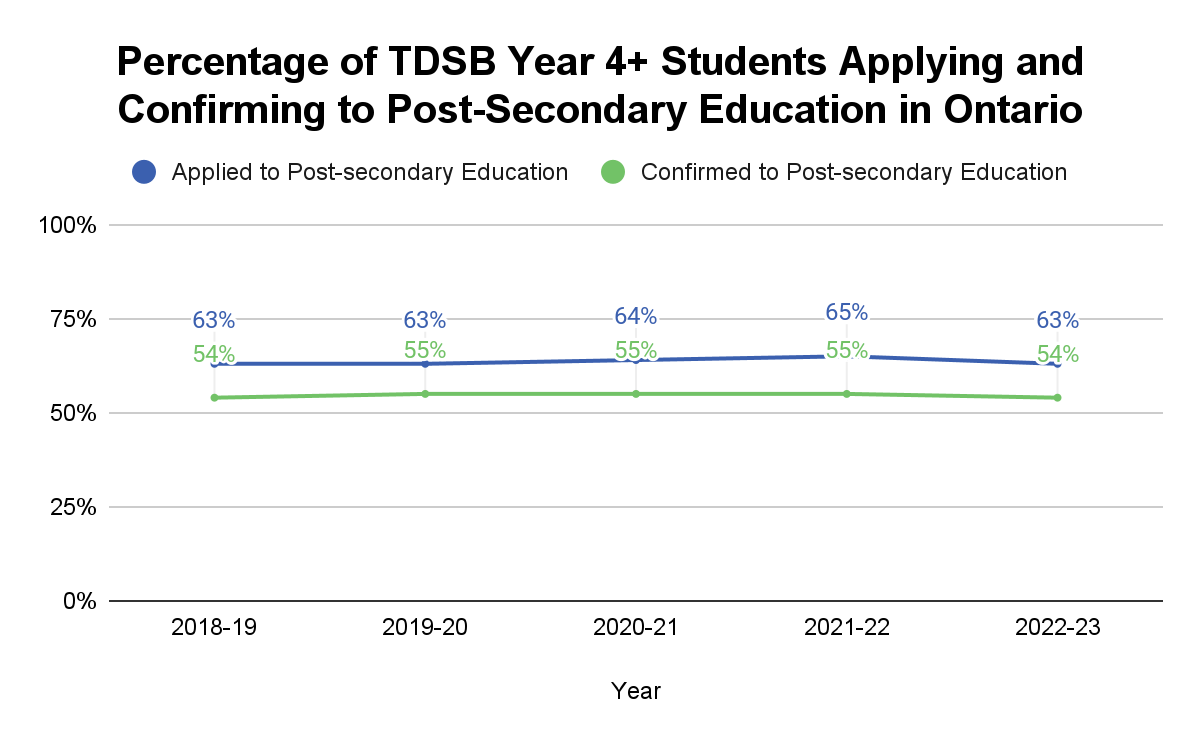
Despite clear growth in student participation in university-level preparation courses, there has not yet been a subsequent increase in applications and confirmations to post-secondary education. Rates of applications and confirmations to Ontario colleges and universities have remained steady (63% and 54%, respectively) from 2018-2019 to 2022-2023 (see Figure 6). The identification and elimination of possible financial, informational, societal, or systemic barriers to applying for postsecondary education is needed to increase these rates.

Figure 6: Percentage of TDSB Year 4+ Students Applying and Confirming to PostSecondary Education in Ontario (College or University).
Chart

Current Actions to Support Destreaming in TDSB at the System Level

As stated, the goal of Academic Pathways K-12 is to identify, address, and eliminate systemic barriers, eliminate disproportionate outcomes for historically and currently underserved students, while also enhancing inclusive instruction so that every student reaches the post-secondary destination of their choice. This commitment begins at Kindergarten registration to Grade 8, where students learn foundational skills and concepts that set them up for success in Grade 9 and 10 destreamed courses. In turn, those courses can lead students to university-preparation courses in Grades 11 and 12, which not only serve as prerequisites for university programs, but also provide the most robust preparation for college programs.

Professional Learning

Focusing on destreaming and inclusion to enhance learning from Kindergarten to Grade 12 requires educators to challenge historical notions of (dis)ability, race and other areas of bias, and reconceptualize how we serve students with varying skills and readiness. Numerous program departments in the TDSB, including the Academic Pathways K-12 department, have engaged educators in professional learning to address these needs. Expectations of staff for serving historically and currently underserved students are being raised to ensure that all students receive the support and opportunities they need to succeed. By providing ongoing professional development, the TDSB aims to equip teachers with the skills and knowledge necessary to create inclusive learning environments that meet the diverse needs of all students, and bring forward a more equitable and supportive system.

The Academic Pathways K-12 Department facilitated professional learning to over 300 Grades 7 and 8 teachers in January 2024 to support inclusive instruction in language and mathematics, as well as through the use of digital tools. Subject area departments have also provided hands-on workshops to teachers to deepen their practice in delivering the new Grade 9 destreamed English and the Grade 9 destreamed Mathematics course. In December 2023, a learning session for mathematics Assistant Curriculum and Curriculum Leaders (ACLs and CLs) from every secondary school focused on effective instruction and assessment for Grades 9 and 10 mathematics courses. As part of the Mathematics Achievement Action Plan, Math Learning Partners have provided in-depth professional learning to over 1300 K-12 teachers and administrators on effective and inclusive Mathematics instruction. This year, the Mathematics and Numeracy Department is offering a professional learning opportunity in partnership with OISE/UT to complement the work with Math Learning Partners called Destreaming Grade 9 Mathematics: Exploring the Curriculum through Inclusion, High Expectations and Impactful Practice. This multi-day learning will occur throughout the 2024-25 school year. Math Learning Partners have worked and will continue to work alongside Grades 3, 6, and 9 mathematics teachers in classrooms to assist with implementing high-impact instructional practices and teaching the mathematics curriculum with fidelity.

Teaching Resources

The TDSB is committed to ensuring that all schools have adequate resources to meet the diverse needs of learners. These resources are culturally relevant and responsive, and demonstrate academic rigor and high expectations for all students. Classroom-ready teaching resources have been provided to teachers to complement their professional learning. For example, the English/Literacy department has provided sample lessons as part of the Grade 9/10 support plan and shared the TDSB Literacy Success Diagnostic Kits with secondary English teachers. In mathematics, teachers in Math Learning Partnership schools have access to digital teaching resources (MathUP and Mathology). All Grade 9 mathematics teachers in the TDSB have access to MathUP, a Ministry-approved resource to use in destreamed classes, and online tools including Knowledgehook and Brainingcamp to augment classroom learning.

Additional Staff

The Ministry of Education provided $11.2 million for additional staff to support destreaming and the transition to secondary school for the 2023-2024 school year. These funds were used to staff elementary guidance positions, reduce class sizes in Grade 9 , provide in-class support for students, and create in-school destreaming coaches to build staff capacity in inclusive teaching and learning.

One challenge that the TDSB will face for the 2024-2025 school year is the removal of the $11.2 million funding from the Ministry of Education to support destreaming and the transition to secondary school. This funding reduction in staff allocation may hinder the board’s ability to effectively implement programs aimed at academic programming and support historically underserved students. Without this financial support, the TDSB will need to attempt to find alternative resources or strategies to continue providing essential services and support for students during these critical educational transitions.

Student Tutoring and Mentoring Program

For the past three years, the Academic Pathways K-12 Department has facilitated a student tutoring and mentoring program, where paid senior students support Grades 9 and 10 students in English, mathematics, science, geography, and history. From September 2023 to May 2024, 19 secondary schools have provided over 2500 hours of tutoring to strengthen achievement in destreamed and Academic courses.

Academic Pathways K-12 Strategy 2024-2028: Action Plan and Associated Timeline

The following goals and actions aim to guide students and provide the necessary support and resources for them to succeed in various post-secondary pathways, whether that be college, university, apprenticeships or directly entering the workforce.

Action: Enhance Teaching of Foundational Skills in Literacy and Numeracy from Kindergarten to Grade 8, and Reduce the Number and Severity of Curriculum Modifications in Literacy and Numeracy in Grades 4-8

The goal is to have students move from their modified grade level in language and mathematics to their age-appropriate grade level. This will be accomplished by supporting the acquisition of foundational literacy and mathematics skills in children which is at the heart of addressing academic streaming and setting students up for success throughout their K-12 educational experience. The Academic Pathways K-12 department will coordinate with the English/Literacy, Mathematics and Numeracy and Special Education and Inclusion departments to support the offering of professional learning opportunities to K-8 educators that lead to the effective implementation of evidence-based instructional strategies for developing foundational literacy and numeracy skills, taught within meaningful and culturally relevant contexts.

For students who have been historically and currently underserved and have curricular expectations modified to a lower grade level on their individual education plans, having a concrete plan for accelerating learning so that they reach grade-level expectations alongside their peers is vital to effective inclusion. We will provide professional learning to elementary staff to illustrate promising teaching practices that accelerate language and mathematics learning for students.

Key Monitoring: In partnership with the Research department, Special Education and Families of Schools, we will monitor the number and severity of curriculum modification over time.

Action: Support Academic Achievement in Grades 9 and 10

TDSB research has indicated that not only are the earning of credits important, but the quality of the credits matter as well. That is, a student who achieves at or above the provincial standard in Grades 9 and 10 is more likely to achieve success in future grades compared to those that do not. Therefore, ongoing professional learning for staff teaching Grades 9 and 10 courses must continue in order to enhance academic achievement. The professional learning sessions that will be offered in collaboration with individual subject-area departments, will promote the effective use of evidence-based instructional practices, including differentiated instruction, universal design for learning, and culturally relevant and responsive pedagogy.

Key Monitoring: Achievement levels for Grade 9 destreamed and Grade 10 Academic courses will continue to be monitored. Monitoring will be expanded to include students’ sense of belonging and engagement.

Action: Provide Adequate Resources to Meet the Diverse Learning Needs of Learners

The implementation of teaching practices that are culturally relevant and responsive in order to support effective instruction can be enhanced and accelerated by providing staff with appropriate teaching and learning resources. The department will work with various subject-area departments to determine how best to utilize the Ministry’s De-streaming Implementation Supports program to maximize impact on students and teachers.

Key Monitoring: The department, in partnership with the Family of Schools, and subject-area departments will monitor well-being, belonging, engagement, and achievement levels using various measurement tools to assess how effectively the supports have helped students. By tracking these key indicators, we aim to provide the initiatives that are making a positive impact on students’ overall educational experience and outcomes.

Action: Increase Proportion of First Nations, Metis and Inuit Students Participating in University-Preparation Courses in Grades 11 and 12

The Academic Pathways K-12 department will work in partnership with the Urban Indigenous Education Centre (UIEC) to increase the proportion of First Nations, Metis and Inuit students participating in university-preparation courses in Grades 11 and 12 over the course of the next three years.

Key Monitoring: In partnership with the Research department and the UIEC, ongoing data will be collected to indicate the proportion of First Nations, Metis and Inuit students participating in university preparation courses.

Action: Increase Proportion of Black Students Participating in University-Preparation Courses in Grades 11 and 12 and Pathways to Postsecondary Education

The Academic Pathways K-12 department will work in partnership with the Centre of Excellence for Black Student Achievement to increase the proportion of African, Afro-Canadian and Black students participating in university-preparation courses in Grades 11 and 12 over the course of the next four years. This partnership will support students in identifying diverse post secondary pathways.

Action: Increase Level of Application to Post-secondary Education

The Academic Pathways K-12 department will work in partnership with the Guidance, Career Development & Student Well-Being department and graduation coaches to determine and address barriers for students to apply to post-secondary education.

Key Monitoring: In partnership with the Family of Schools, Guidance, Career Development & Students Well-Being department, Research department and the Equity team we will monitor student experience and trajectories to provide opportunities for students to post-secondary education.


References

Brown, R., Parekh, G., & Gallagher-Mackay, K. (2018). Getting Through Secondary School: The Example of Mathematics in Recent TDSB Grade 9 Cohorts. Higher Education Quality Council of Ontario (HEQCO) 2018 Annual Conference Pre-Conference on the Tri-Ministry Ensuring Equitable Access to Postsecondary Education Strategy (Access Strategy).

Gallagher-Mackay, K., Brown, R.S., Parekh, G., James C.E. & Corso, C. (2023). “I have all my credits – now what?”: Disparities in postsecondary transitions, invisible gatekeeping and inequitable access to rigorous upper year curriculum in Toronto, Ontario. Toronto: Jean Augustine Chair in Education, Community and the Diaspora at York University.

Orpwood, G., Schollen, L., Leek, G., Marinelli-Henriques, P. & Assiri, H. (2012). College Mathematics Project 2011: Final Report for the Ontario Ministry of Education and the Ontario Ministry of Training, Colleges and Universities. Toronto: Seneca College of Applied Arts and Technology

Parekh, G. (2013). Structured Pathways: An Exploration of Programs of Study, School-wide and In-school Programs, as well as Promotion and Transference across Secondary Schools in the Toronto District School Board. Toronto: Toronto District School Board.
Why Building Thinking Classrooms Works: Using Evidence from Cognitive Science Research to Explain the Effectiveness of the BTC Framework

Peter Liljedahl’s Building Thinking Classrooms (BTC) framework has become central in discussions about K-12 math education since the publication of his book, Building Thinking Classrooms in Mathematics, Grades K-12: 14 Teaching Practices for Enhancing Learning, in 2020. Its 14 teaching practices have gained significant traction across Canada, the U.S., and beyond, with BTC sessions—often featuring Liljedahl himself—appearing at nearly every major mathematics education conference.

I started incorporating some of the BTC practices into my high school math classes in 2019 and have supported a number of teachers with them for a few years prior as a math coach. Through my own experiences with the framework, I observed significant improvements in students meeting learning objectives, their problem-solving enjoyment, and the quality and quantity of math discussions amongst students. For me, this experience highlighted the framework’s potential for fostering productive and enjoyable math learning.

As a math leader for my school board, I have collaborated with Peter along with a team of math coaches to train thousands of K-12 educators in BTC practices through a lens of equity and inclusion. Over two years, the response from teachers has been overwhelmingly positive, with many teachers in almost every school in my district experimenting with the practices in their classrooms.

However, the widespread adoption of BTC across North America has invited scrutiny from parents, educators, and others interested in public education. Critics question the scientific evidence supporting BTC’s effectiveness, especially since cognitive science research often highlights explicit instruction as the most effective math teaching method.

I want to be clear that I welcome this scrutiny and value the debate about math teaching methods. Engaging in respectful discussions is crucial for professional growth and improving the field of math education. I also believe that the BTC framework has room for improvement and will continue to evolve. Given the apparent conflict between cognitive science research and the positive experiences of BTC users—including my own—I began exploring this body of research and its related theories to try and understand BTC’s effectiveness from a cognitive science perspective.

My exploration is revealing that cognitive science research—and specifically cognitive load theory—offer valuable insights into why BTC practices can enhance student learning. Instead of opposing viewpoints, I found that many BTC principles align with established cognitive science research.

While this post will not fully address all criticisms of BTC or inquiry-based instruction in general, it aims to offer insights into why BTC practices work (and sometimes don’t) and how their use is actually supported by the same research base that is often used to argue against them. I hope this piece contributes to a more nuanced discussion about math teaching, fosters ongoing constructive dialogue and helps to integrate diverse strategies to meet the complexities of inclusive classroom instruction.

Part I: Background

Since this post is aimed at classroom teachers, parents, researchers, and other education stakeholders who may be unfamiliar with cognitive science or Building Thinking Classrooms beyond the basics, I will provide a brief overview to help illustrate the connections I will be making between these two areas.

What is Explicit (or Direct) Instruction?

Explicit instruction, also referred to as direct instruction, is a teaching approach that introduces new concepts through clear, step-by-step explanations, teacher modelling, and structured guidance. Students are actively engaged through answering questions, practicing, and receiving feedback to achieve understanding and mastery.

Barak Rosenshine (1976) suggested that direct instruction was an optimal form of teaching primary school students from low socioeconomic backgrounds. In 2012, Rosenshine shared 10 of the most salient strategies in Principles of Instruction: Research-Based Strategies That All Teachers Should Know. These practices are supported by evidence from cognitive science research and classroom studies and assist students with developing strong content knowledge, understanding, and fundamental skills in many subjects, including mathematics.

It is important to make a distinction between the terms direct instruction and Direct Instruction (with capital letters). The latter refers to a specific model of teaching developed by Siegfried Engelmann in the 1960s that involves carefully sequenced and scripted lessons (National Institute for Direct Instruction, 2024). I will use the term explicit instruction instead of direct instruction to avoid any conflation with Engelmann’s Direct Instruction approach.

A main distinction between explicit instruction and inquiry-based instruction, such as BTC, lies in the sequence of explicit teaching and problem-solving. Advocates of explicit instruction follow an instructional hierarchy that emphasizes clear teaching and mastery of mathematical procedures prior to engaging in problem-solving experiences. In contrast, inquiry-based instruction uses problem solving as a means to learn concepts and procedures, with explicit instruction as one way to summarize the learning at or towards the end of lessons.

What is Cognitive Load Theory?

Much of the research supporting explicit instruction in K-12 math classrooms is based on cognitive load theory, developed by John Sweller in 1988. This theory proposes that the human brain has a limited working memory capacity for processing new information. Generally, a person can hold about 7 chunks of information at a time, plus or minus 2 (Miller, 1956), but it can be as low as 3 to 5 chunks for young adults (Cowan, 2010). When this capacity is exceeded, learning is hindered. However, retrieving information from long-term memory into working memory appears to have no limits (Kirschner, Sweller, & Clark, 2006).

When learning new information, there are three sources of cognitive load: intrinsic cognitive load, extraneous cognitive load, and germane cognitive load. Intrinsic load is the inherent complexity of the information that a learner has to process. This complexity is often measured in terms of element interactivity (Kirschner et al., 2017, Ashman, Kalyuga, & Sweller, 2019). 

A task with low element interactivity involves processing bits of information that are independent of one another, such as learning the names of three-dimensional solids (e.g. sphere, cylinder, cone). Since these names are unrelated, the intrinsic cognitive load of this task is low.

Conversely, a task with high element interactivity requires processing multiple pieces of information simultaneously. For example, determining the relationship between the volumes of spheres, cylinders, and cones as the radius increases involves calculations and comparisons, thereby increasing element interactivity and intrinsic cognitive load. However, if a student is skilled in calculating volume, then the intrinsic load is decreased. Therefore, element interactivity depends on both the task and the level of expertise of the learner (Kirschner et al., 2017).

Extraneous cognitive load, in contrast, refers to the mental effort caused by factors unrelated to the learning task (Kirschner et al., 2017). Examples of extraneous load are the manner in which the task information is presented, the clarity of the instructions, or the environmental stimulus of the classroom during a task. To reduce extraneous load, teachers should design tasks and environments that minimize distractions, use clear language, and focus on the learning goals.

Germane cognitive load refers to the mental effort involved in integrating new learning into long-term memory through schemas—mental representations of concepts that help to make connections to different ideas and improve efficiency. Unlike intrinsic and extraneous cognitive load, germane load benefits learning and should be promoted.

In summary, cognitive load theory implies that teachers should design instruction to:

  • minimize intrinsic and extraneous cognitive load to avoid overwhelming learners 
  • promote drawing on students’ long-term memory to support new learning 
  • maximize germane cognitive load to promote information processing into long-term memory for later use

It is mainly from this perspective that advocates of explicit instruction argue that inquiry-based learning with minimal teacher guidance is ineffective (Kirschner, Sweller, & Clark, 2006). “Discovery learning” is seen as imposing an unnecessarily high cognitive load on novice learners by leaving students to aimlessly figure out problems without direction and fail to develop useful schemas for understanding math concepts. Explicit instruction proponents, therefore, advocate for teachers to lead the learning of math concepts and skills through clear explanations, modelling solutions, scaffolding learning for novice learners, asking lots of questions, checking for student understanding, and providing guided practice (Rosenshine, 2012).

What is Building Thinking Classrooms?

The Building Thinking Classrooms framework is a collection of 14 teaching practices developed by Peter Liljedahl over 15 years of research. When implemented in concert, these practices are designed to increase student thinking and improve math learning. These practices are described in detail in his book, Building Thinking Classrooms in Mathematics, Grades K-12: 14 Teaching Practices for Enhancing Learning, published in 2020. Updates to the framework are available in his second book, Mathematics Tasks for the Thinking Classroom, Grades K-5, co-authored with Maegan Giroux.

The BTC framework was developed to address what Liljedahl identified as a lack of meaningful and deep thinking on the part of students in mathematics classrooms, which he attributes to institutional norms that either inhibit student thinking or fail to encourage it. These norms include ineffective teacher-led lessons that prioritize mimicry over understanding, seating students independently in rows rather than in clusters to promote collaboration, and over-scaffolding activities that foster learned helplessness. The BTC framework is meant to disrupt these norms by elevating students’ expectations while developing a supportive classroom environment with teacher guidance.

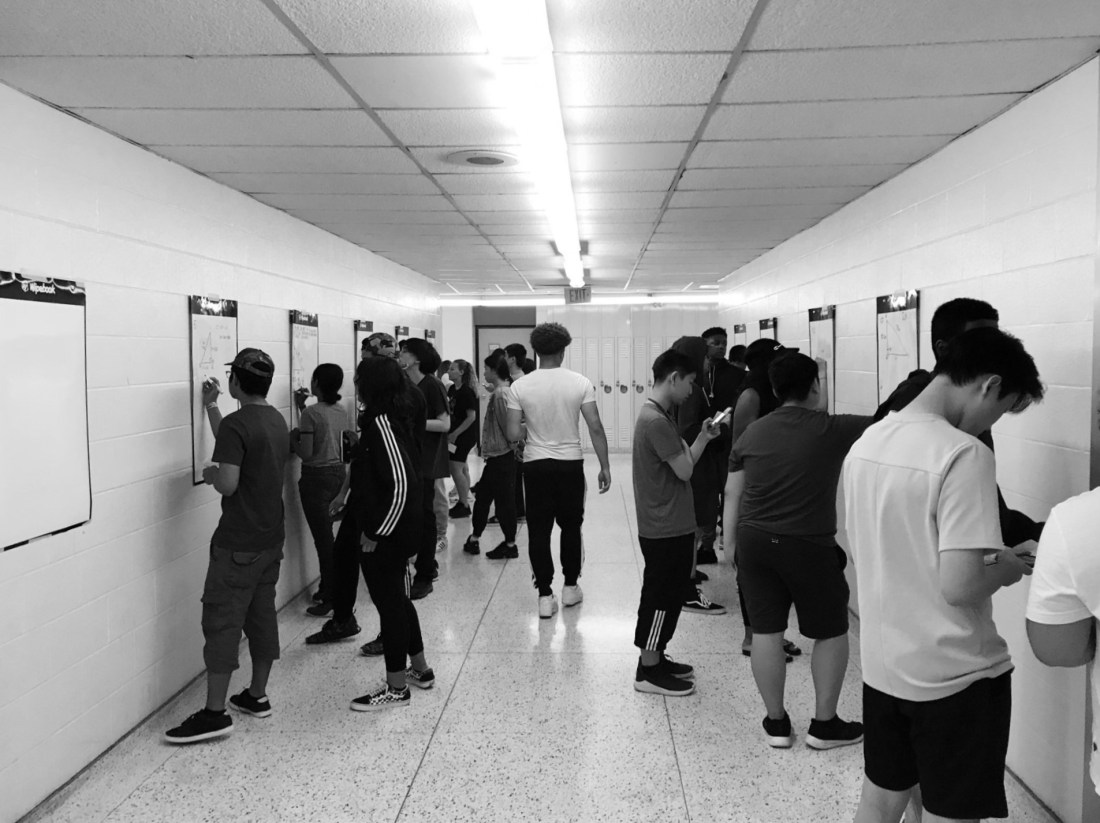
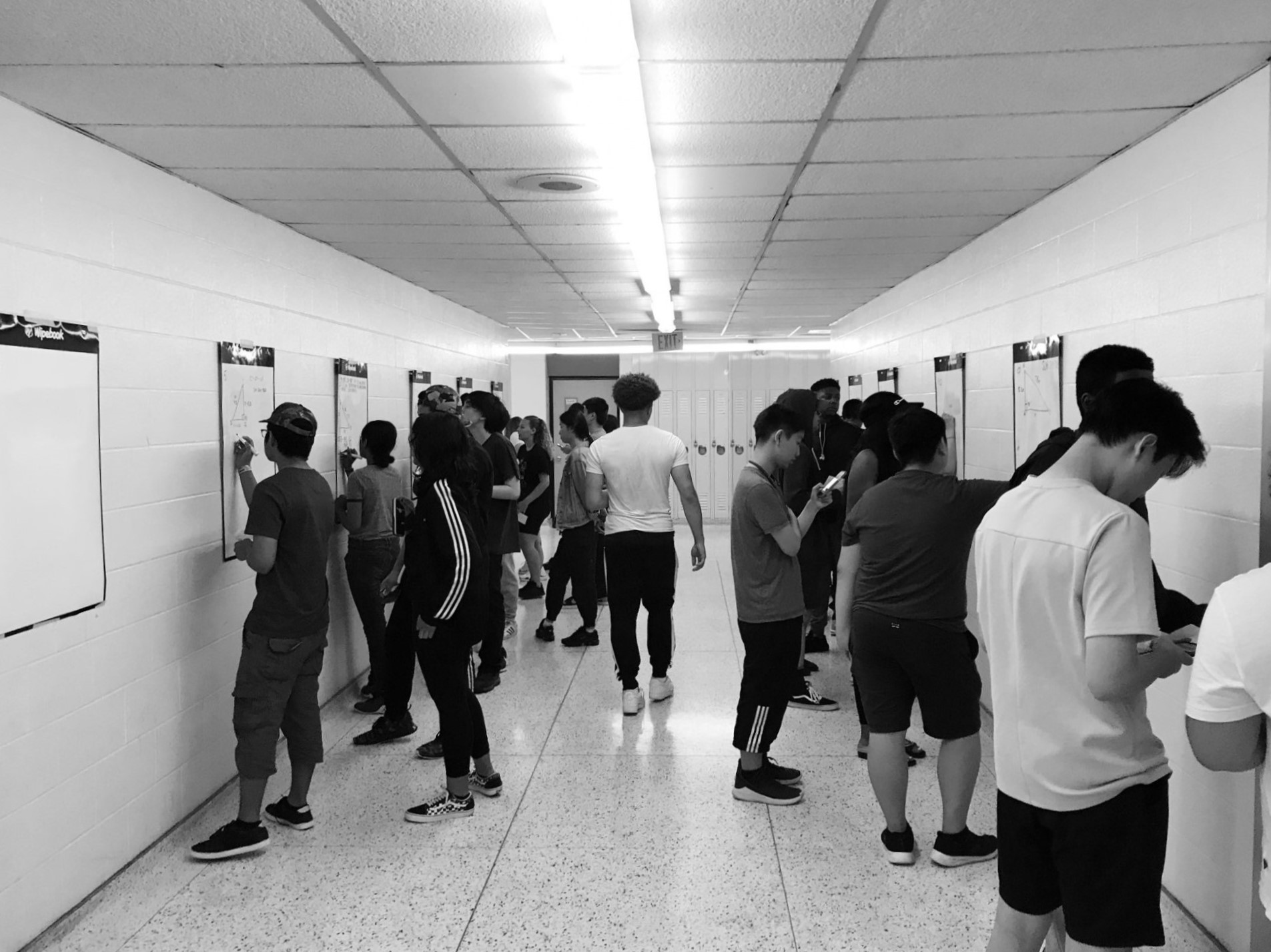
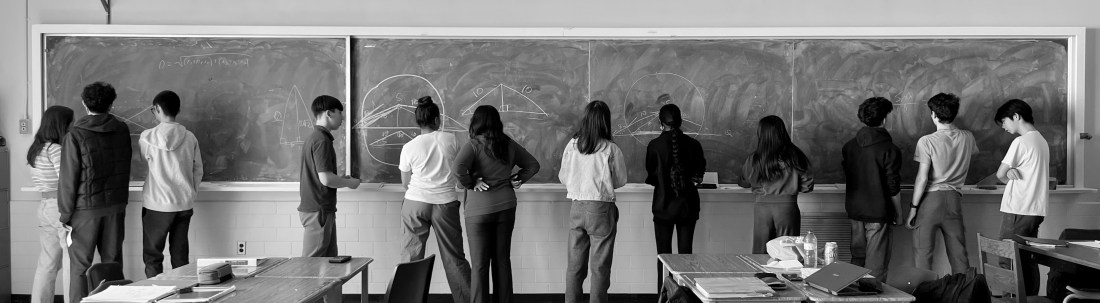
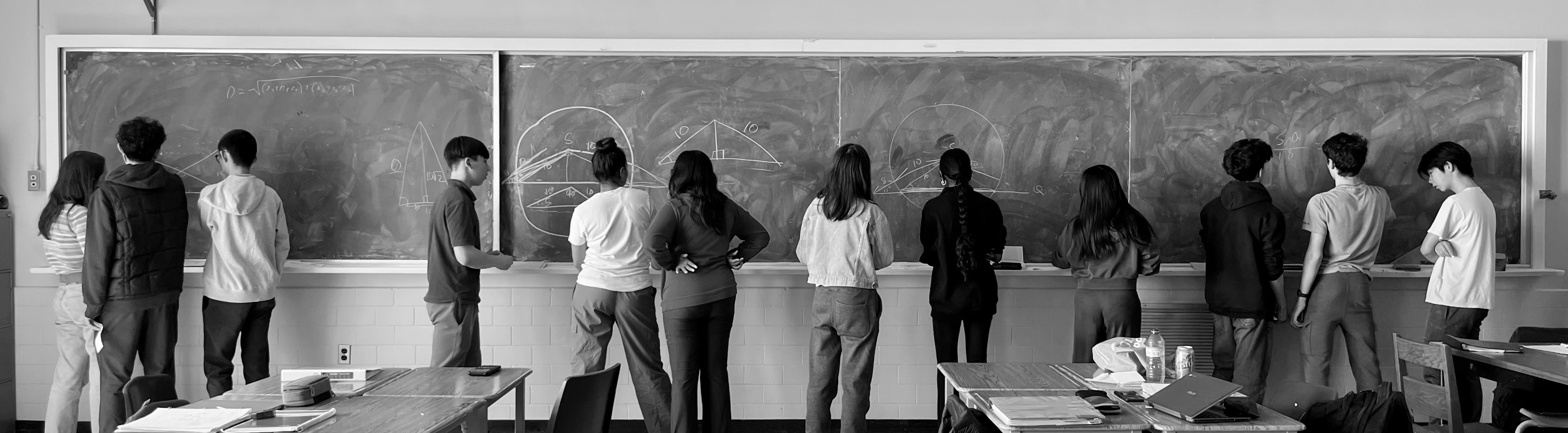
The most recognized aspect of the BTC framework is having students solve problems on vertical non-permanent surfaces (e.g., whiteboards, chalkboards, and windows). However, the framework is much more than that one strategy, encompassing a variety of teacher moves, task designs, and assessment practices that guide students to solve math problems effectively and to learn skills and concepts efficiently. For a more detailed overview of each of the 14 BTC practices, you can read the executive summary.

Part II: Connections Between Cognitive Science and Building Thinking Classrooms

In this section, I link cognitive science research to three BTC practices that are often criticized for lacking scientific evidence:

  1. Constructing students’ understanding of math skills or topics using “thin-sliced” tasks with hints and extensions.
  2. Having students work collaboratively in random groups of three.
  3. Encouraging students to make meaningful notes for their “future forgetful self.”

As I delved deeper into explicit instruction, cognitive load theory, and the myriad instructional effects demonstrated by cognitive science research, I began to see why these three BTC practices often succeed in math classrooms. My analysis also provides insight into the conditions that are necessary for these practices to be successfully implemented.

  1. Constructing students’ understanding of math skills or topics using “thin-sliced” tasks with hints and extensions

Overview

A thin-sliced task is a series of questions strategically designed to build a math skill or concept in small, progressive steps. The questions gradually increase in complexity and difficulty, but begin by drawing on students’ prior knowledge. The initial questions should be simple enough for anyone in the class to answer. The next set of questions go deeper into a new math topic, and the final set reaches the lesson’s learning goals with higher complexity. Within each group, questions incrementally increase in difficulty, with only one aspect of the question changing at a time. This prompts students to focus on specific aspects of the mathematics, allowing them to gradually and sequentially build their skills and understanding.

Here is an example of a thin-sliced task that my colleague, Michelle Cavarretta, and I developed to introduce and develop skills for simplifying algebraic expressions. We cut the stages into strips of paper so students would only focus on one stage at a time. Once a group of students felt that they had successfully answered all three questions, they would call me over to check, and if they were correct, the group moved onto the next stage of questions.

StageTasks
ASimplify these statements:

5 MOOSE + 4 SHEEP + 3 MOOSE – 2 SHEEP
8 MOOSE + 5 SHEEP – MOOSE – 4 SHEEP
6 MOOSE + 2 SHEEP – 5 MOOSE + 3 SHEEP + 8 MOOSE – SHEEP

**CHECK WITH MR. TO!**
BSimplify these algebraic statements:

8M + 5S – 2M + 3S
6M + 8S – M + 2S
9x + 3y + 2x + 4y

**CHECK WITH MR. TO!**
CSimplify:

9x + 3 + 2x + 4
7x + 6 – 3x + 5
9x – 4 + 3x + 6x – 3 + 5x

**CHECK WITH MR. TO!**
DSimplify:

6x2 + 5x + 8 + 3x2 – 2x – 1
8x2 – 2x + 4 – 6x2 – 3x – 7
9x2 – 5x – 6 – 2x2 + 2x – 3

**CHECK WITH MR. TO!**
ESimplify:

2a2 – 6 + 4a + 6 – 5a2 – 3a
9x2 – 5x – 6 – 2x2 + 2x – 3
6x2y + 2xy2 – 3x2y + 6xy2 

**CHECK WITH MR. TO!**

An example of a thin-sliced task.

The use of thin-sliced tasks can be described as a form of guided discovery (Mayer, 2004) because it incorporates regular feedback and just-in-time guidance to students. The feedback can be intrinsic to the mathematics being learned (e.g., students checking their answers when solving equations by substituting the value of the variable into the original equation) or built into the flow of the task and provided externally (e.g., by a teacher or peers). Students need to confirm that they are on the right track and grasping the intended concepts. The teacher plays a crucial role in constantly circulating and monitoring progress.

Guidance during thin-sliced tasks is also given through hints and extensions when groups are stuck or ready for greater challenge. According to Liljedahl, hints can either increase skill (e.g., by providing a strategy) or decrease challenge (e.g., by giving part of the answer). The purpose of providing hints is to keep groups productive and working in a state of flow, a concept made popular by psychologist Mihály Csíkszentmihályi (Liljedahl, 2020).

Supporting evidence from cognitive science research

The strategy of developing a mathematical concept or skill in small, incremental steps is supported by cognitive science as an effective way to introduce new learning. Rosenshine (2012) highlights that effective teachers present small amounts of new material at a time to avoid overloading students’ working memory. To ensure mastery before moving on, teachers regularly check for understanding, provide additional explanations, and ensure students have the requisite information to work independently (Rosenshine, 2012).

Guidance throughout the learning process, such as the support throughout thin-sliced tasks, is also crucial for successful teaching. The main issue with a pure discovery-based approach (i.e. with minimal to no guidance) is that when students are given a problem to solve without hints or prompts, they may simply stumble upon a solution that may not actually lead to the development of a useful schema, leading to minimal or no learning (Mayer, 2004; Clark, Kirschner, & Sweller, 2012). To avoid this, explicit guidance in the form of teacher monitoring, hints, prompts, and regular feedback is essential for learning to take place.

In addition to teacher guidance, the intrinsic guidance of thin-sliced tasks can help students focus on the learning objective. Mayer (2004) highlights that when students are told what learning to attend to with guided discovery methods, they learn more effectively and retain information better compared to students who learned using pure discovery methods. Thin-sliced tasks are intentionally designed using variation theory (Kullberg, Runesson Kempe, & Marton, 2017) to direct students’ attention to the key elements of the question.

Mayer (2004) also notes that prior studies demonstrate the superiority of guided discovery in comparison to pure discovery and expository methods (i.e. explicit instruction) in mathematics when it comes to tests on immediate retention, delayed retention, and transfer problems. Guided discovery helps students construct appropriate knowledge to make sense of new information and integrate it with their existing knowledge. Thin-sliced tasks as a form of guided discovery, therefore, have the potential to be the most effective method of mathematics instruction.

There is additional evidence in the cognitive science literature suggesting that problem solving followed by explicit instruction can be effective for tasks with low complexity or low element interactivity (Ashman, Kalyuga, & Sweller, 2020). If a thin-sliced task is well-designed to build students’ expertise gradually, then element interactivity stays relatively low, allowing problem solving to be beneficial for learning.

Summary

Thin-sliced tasks with hints and extensions minimize cognitive load by guiding students through the acquisition of mathematical skills in small, incremental steps with support. By using variation theory and strategically changing only one facet of each question at a time, these tasks help focus students’ attention on the most important aspects, providing the guidance that pure discovery methods lack. Additionally, feedback—whether embedded in the questions or provided by the teacher—ensures that students stay on track and learn the intended material.

  1. Having students work collaboratively in random groups of three.

Overview

According to Liljedahl, random groups of three students strike an optimal balance between knowledge redundancy (e.g., shared vocabulary, math understanding, and learning experiences) and diversity of ideas, approaches, and perspectives, enabling effective collaboration to engage in problem solving, including thin-sliced tasks. By probability, students will inevitably work with each of their peers at least once during the school year or semester.

For these groups to be productive, students need to learn how to collaborate effectively. Liljedahl suggests starting the school year with 3 to 5 non-curricular tasks. These engaging activities, while not necessarily tied to curriculum standards, help stimulate discussions and establish positive norms for collaboration.

To further develop collaboration skills, Liljedahl recommends co-creating simple rubrics with students that outline desired behaviors during group work. These rubrics serve as an accountability tool to ensure effective teamwork. As collaboration skills improve, social barriers break down, knowledge sharing increases, and student thinking flourishes.

Supporting evidence from cognitive science research

Cognitive load theory, traditionally used to study individual learning, has been applied by Kirschner et al. (2009) to explain the benefits of collaborative learning. As task complexity increases, individual learning becomes less effective compared to group learning. In difficult tasks, cognitive load is high, but it can be distributed among the working memory capacity of individual group members, thus reducing the burden on any single working memory (Zambrano R., Kirschner, & Kirschner, 2020). This concept is known as the collective working-memory effect (Kirschner, Paas, & Kirschner, 2011; Sweller, van Merriënboer, & Paas, 2019).

Essentially, the collective working-memory effect describes how individuals can pool together their working memory resources to achieve a collective working memory that eases the strain on any one person. This effect is particularly beneficial in groups of learners with low prior knowledge (Kirschner et al., 2018), which supports the use of collaborative learning among novices. Group work, therefore, can act as a scaffold for students to attempt more difficult tasks—a hallmark of effective teaching (Rosenshine, 2012).

However, collaborative learning can also introduce extraneous cognitive load. To minimize this, Zambrano R. et al. (2020) suggest:

  • Keeping group sizes small to limit the demands of group interactions and reduce the risk of “social loafing” (Kirschner et al., 2018).
  • Distributing information as homogeneously as possible amongst group members.
  • Ensuring group members are familiar with each other and have prior experience working together on tasks with similar structure.
  • Clarifying expectations for group work.

It is worth reiterating the importance of developing students’ collaboration skills for reducing the extraneous cognitive load associated with group dynamics. Kirschner et al. (2018) caution that “if learners have not acquired these skills prior to beginning on the collaborative task, the load induced here could be so high as to hinder collaborative learning.” Providing non-curricular tasks and co-creating rubrics to establish norms for collaboration, therefore, are the concrete steps that teachers can take to explicitly support students’ acquisition of the requisite collaboration skills needed to unlock the benefits of group work. In addition, creating random groups facilitates students gaining experience working with each of their peers and ensures that collaborative norms are consistent for all students.

Additionally, tasks must be sufficiently challenging to justify the collaborative effort. If every group member can complete the task independently, then group work becomes unnecessary and even counterproductive (Kirschner et al., 2018). Despite these caveats, the benefits of collaborative learning far outweigh the costs (Kirschner, Paas, & Kirschner, 2011).

Summary

Organizing students into random groups of three helps to reduce the extraneous cognitive load associated with collaboration while maximizing the benefits of diverse perspectives and the formation of a collective working memory needed to tackle complex math tasks that could not be done by any one individual alone. Investing in the development of collaboration skills using non-curricular tasks and rubrics further minimizes the cognitive load costs of group work. The collective working-memory effect enables students “to process information elements deeply and construct higher quality schemas in their [long-term memories] than learners working individually” (Kirschner, Paas, & Kirschner, 2011).

  1. Encouraging students to make meaningful notes for their “future forgetful self.”

Overview

Liljedahl argues that traditional note-taking, where students simply copy down notes written by the teacher, is a cognitively passive activity that hinders learning. Students can usually either listen to what the teacher is saying or they can focus on copying down what the teacher is writing; however, doing both is extremely difficult. Liljedahl advocates for a shift from passive note-taking to active note-making.

After a lesson consolidation in a thinking classroom, students are encouraged to work collaboratively to synthesize the main ideas and create notes that will help them remember what they have learned. Liljedahl refers to this as making notes to your future forgetful self.

For some students, creating personalized notes is a very open experience and can feel daunting, so initial or ongoing support may be needed. Peer collaboration can help ensure that notes are comprehensive, and a graphic organizer, such as the one below, can guide students in capturing key information and details.

A template for a meaningful note (Liljedahl and Giroux, 2024).

An essential component of effective notes is the inclusion of worked examples—questions with full solutions and, if necessary, diagrams for context. Worked examples can include annotations with self-explanations to clarify the reasoning behind key steps. Students are encouraged to include multiple worked examples to cover various problem types.

Supporting evidence from cognitive science research

Cognitive science research strongly supports the use of worked examples in mathematics learning. Well-designed worked examples, particularly those integrating visuals, can facilitate knowledge construction more effectively than solving equivalent problems without guidance (Kirschner, Sweller, & Clark, 2006; Rosenshine, 2012; Sweller, van Merriënboer, & Paas, 2019). This is known as the worked example effect. As students practice and develop fluency, referencing worked examples from their notes can provide significant benefits.

However, simply viewing worked examples is not enough. Chi et al. (1994) found that prompting students to provide self-explanations while studying worked examples greatly enhances their effectiveness. Annotating steps and explaining the reasoning behind them encourages deeper thinking and maximizes the benefits of worked examples—a phenomenon known as the self-explanation effect (Sweller, van Merriënboer, & Paas, 2019).

Collaborative note-taking also has some evidence in terms of enhancing information processing. Costley and Fanguy (2021) found that when students collaborated on note-taking in an online setting that involved explaining ideas to others and providing feedback, they experienced higher levels of germane cognitive load (i.e., effective information processing) and greater understanding compared to those who took notes individually.

Summary

The process of students collaboratively writing their own notes can improve information processing by increasing germane cognitive load. These student-generated notes can take advantage of the worked-example and self-explanation effects by incorporating a number of fully worked-out solutions to various problems that also include students’ own annotations to explain the underlying reasoning behind the steps.

Part III: Conclusion

Peter Liljedahl’s Building Thinking Classrooms framework, perhaps coincidentally, leverages instructional effects and principles from cognitive science to create powerful mathematics learning environments. As a form of guided inquiry-based instruction, BTC practices foster conditions for students to solve problems as a means of developing understanding and procedural skills. Unlike the stereotype of discovery-based learning where students are left to discover math concepts on their own, the BTC framework provides extensive support through task design (e.g. thin-sliced tasks that build skills incrementally), collaborative learning (e.g., forming random groups of three to create a collective working memory capacity and foster collaboration skills), and teacher guidance (e.g., monitoring progress, offerings hints and extensions, providing feedback, encouraging meaningful note-making). These elements provide the substantial guidance that all students, but particularly novice learners, need to achieve the desired learning outcomes in K-12 math classrooms.

This piece is not intended to argue that BTC is superior to explicit instruction in teaching mathematics. While I agree with de Jong et al. (2023) that a combination of inquiry-based instruction and explicit instruction is beneficial, my focus here is to show that BTC, like explicit instruction, aligns with instructional principles based on cognitive load theory and cognitive science research. Specifically, I argue that beginning with problem-solving experiences in the form of thin-sliced tasks, supported with hints and group work, is an effective instructional approach rooted in established cognitive science research. Contrary to Sweller et al.’s (2024) assertion that novice learners require concepts to be fully explained and procedures fully modelled before they apply those procedures, I hope I have illustrated that collaborative problem solving is a valid initial approach, especially for low element interactivity material and when collaborative cognitive load principles are applied. In those cases, the evidence suggests that problem solving is actually the more effective approach.

Given BTC’s increasing popularity among K-12 teachers, I encourage colleagues and educational researchers to further explore how cognitive science can enhance its effectiveness. A deeper understanding of cognitive load theory and cognitive science research can only refine and optimize the implementation of the Building Thinking Classrooms framework for the benefit of student learning.

References

Ashman, G., Kalyuga S., & Sweller, J. (2020). Problem-solving or Explicit Instruction: Which Should Go First When Element Interactivity is High? Educational Psychology Review, 32, 229-247.

Chi, M. T. H., Deleeuw, N., Chiu, M. H., & Lavancher, C. (1994). Eliciting self-explanations improves understanding. Cognitive Science, 18, 439–477.

Clark, R., Kirschner, P.A., and Sweller, J. (2012). Putting Students on the Path to Learning: The Case for Fully Guided Instruction. American Educator, 36(1), 6-11.

Costley, J. & Fanguy, M. (2021). Collaborative note-taking affects cognitive load: the interplay of completeness and interaction. Educational Technology Research and Development, 69, 655-671.

de Jong, T., Lazonder, A.W., Chinn, C.A., Fischer, F., Gobert, J., Hmelo-Silver, C.E., Koedinger, K.R., Krajcik, J.S., Kyza, E.A., Linn, M.C., Pedaste, M., Scheiter, K., and Zacharia, Z.C. (2023). Let’s talk evidence – The case for combining inquiry-based and direct instruction. Educational Research Review, 39, https://doi.org/10.1016/j.edurev.2023.100536.

Kirschner, F., Paas, F., & Kirschner, P. A. (2009). A cognitive-load approach to collaborative learning: United brains for complex tasks. Educational Psychology Review, 21, 31-42.

Kirschner, F., Paas, F., & Kirschner, P. A. (2011). Task complexity as a driver for collaborative learning efficiency: The collective working-memory effect. Applied Cognitive Psychology, 25(4), 615-624.

Kirschner, P.A., Sweller, J., & Clark, R. (2006). Why minimal guidance during instruction does not work: An analysis of the failure of constructivist, discovery, problem-based, experiential, and inquiry-based learning. Educational Psychologist, 41(2), 75-86.

Kirschner, P.A., Sweller, J., Kirschner, F., & Zambrano R., J. (2018). From Cognitive Load Theory to Collaborative Cognitive Load Theory. International Journal of Computer-Supported Collaborative Learning, 13, 213-233.

Kullberg, A., Runesson Kempe, U., & Marton, F. (2017). What is made possible to learn when using the variation theory of learning in teaching mathematics? ZDM Mathematics Education, 49, 559–569.

Liljedahl, P. (2020). Building Thinking Classrooms in Mathematics, Grades K-12: 14 Teaching Practices for Enhancing Learning.  Corwin.

Liljedahl, P. & Giroux, M. (2024). Mathematics Tasks for the Thinking Classroom, Grades K-5. Corwin.

Mayer, R.E. (2004). Should There Be a Three-Strikes Rule Against Pure Discovery Learning? American Psychologist, 59(1), 14-19.

Miller, G. A. (1956). The magical number seven, plus or minus two: Some limits on our capacity for processing information. Psychological Review. 63(2): 81–97.

National Institute for Direct Instruction. (2024). DI vs. di: The Term “Direct Instruction.”

Rosenshine, B. (1976). Recent Research on Teaching Behaviors and Student Achievement.  Journal of Teacher Education, 27(1), 61-64.

Rosenshine, B. (2012). Principles of Instruction: Research-Based Strategies That All Teachers Should Know. American Educator, 36(1), 12-19.

Sweller, J., Clark, R. & Kirschner, P.A. (2010). Mathematical ability relies on knowledge, Too. American Educator, 34(4), 34-35.

Sweller, J., van Merriënboer, J. & Paas, F. (2019). Cognitive Architecture and Instructional Design: 20 Years Later. Educational Psychology Review, 31, 261-292.

Sweller, J., Zhang, L., Ashman, G., Cobern, W., and Kirschner, P.A. (2024). Response to De Jong et al.’s (2023) paper “Let’s talk evidence – The case for combining inquiry-based and direct instruction.” Educational Research Review, 42. https://doi.org/10.1016/j.edurev.2023.100584.

Zambrano R., J., Kirschner, P.A., & Kirschner, F. (2020). How cognitive load theory can be applied to collaborative learning. In S. Tindall-Ford, S. Agostinho, & J. Sweller (Eds.), Advances in cognitive load theory: Rethinking teaching (pp. 30-40). Routledge.

Mathematics Doesn’t Get a Pass on Racial Justice Reform

Image

Over what was supposed to be a calm July weekend, elements of the new Ontario Grade 9 destreamed math curriculum suddenly drew the ire of National Post columnist Jonathan Kay, and then, among others, writer James Lindsay, politician Maxime Bernier and Toronto Sun columnist Brian Lilley. Particularly, one principle underlying the math course sparked considerable outrage:

An equitable mathematics curriculum recognizes that mathematics can be subjective. Mathematics is often positioned as an objective and pure discipline. However, the content and the context in which it is taught, the mathematicians who are celebrated, and the importance that is placed upon mathematics by society are subjective. Mathematics has been used to normalize racism and marginalization of non-Eurocentric mathematical knowledges, and a decolonial, anti-racist approach to mathematics education makes visible its historical roots and social constructions. The Ontario Grade 9 mathematics curriculum emphasizes the need to recognize and challenge systems of power and privilege, both inside and outside the classroom, in order to eliminate systemic barriers and to serve students belonging to groups that have been historically disadvantaged and underserved in mathematics education.

After Mr. Lilley published an opinion piece calling for Ontario Education Minister Stephen Lecce to “fix this,” the above passage was subsequently removed from the Ministry of Education’s Digital Curriculum Platform.

But it didn’t stop there. As noted by Jamie Mitchell, additional parts of the curriculum were also quietly deleted:

  • A key skill to “recognize the ways in which mathematics can be used as a tool to uncover, explore, analyse, and promote actions to address social and environmental issues such as inequity and discrimination”
  • Addressing “issues of power and social justice in mathematics education”
  • Creating “anti-racist and anti-oppressive teaching and learning opportunities”
  • Making “visible the colonial contexts of present-day mathematics education”
  • Suggesting that mathematical modelling can be used “to address critical social and environmental issues that are relevant to [students’] lives and communities.”

I hope to outline why these deletions have no real basis, especially in light of the government’s announced commitment to anti-racism, other than to appease those with dissenting views.

Mathematics, in practice, application, and status, is subjective

The mathematics that we teach in schools is decided by government-created curricula and is not absolute. In Ontario, there is no emphasis on proofs or conic sections. Instead, we focus on financial literacy and coding. Michole Enjoli outlines how the mathematics that is taught in schools is based on what society values. As a whole, we have marginalized cultural mathematics to make room for concepts that better serve the aims of capitalism. These are active decisions made by those in power.

How we assess students’ mathematical understanding is also arbitrary. What skills we value, the questions we ask, and the knowledge we recognize are based on decisions made by people and sometimes mediated by statistical analyses. This article from the National Council of Teachers of Mathematics argues how “all assessments of students’ mathematical understanding are subjective.”

Even mathematics as it is held up on a pedestal and privileged in society is a conscious decision. It seems that being awesome at math automatically makes one smart, but being excellent in other endeavours does not garner the same default clout. Is it because we have made success in math exclusive only for a select few? Do we view math abilities as innate in certain people? I hope not. Perhaps it’s because mathematics has helped to advance humankind in a myriad of ways. Unfortunately, math has also been used to cause significant harm to entire populations (more on that later). In any case, we have made a choice to give mathematics, over many other disciplines, privilege in our world.

Mathematics as a subjective enterprise is not inherently bad nor good – that’s not the point. However, we need to let go of the idea that mathematics is pure and objective, as that worldview erases the reality of how math is positioned in society and taken up as an experience by billions of people around the world.

Mathematics has been used to normalize racism

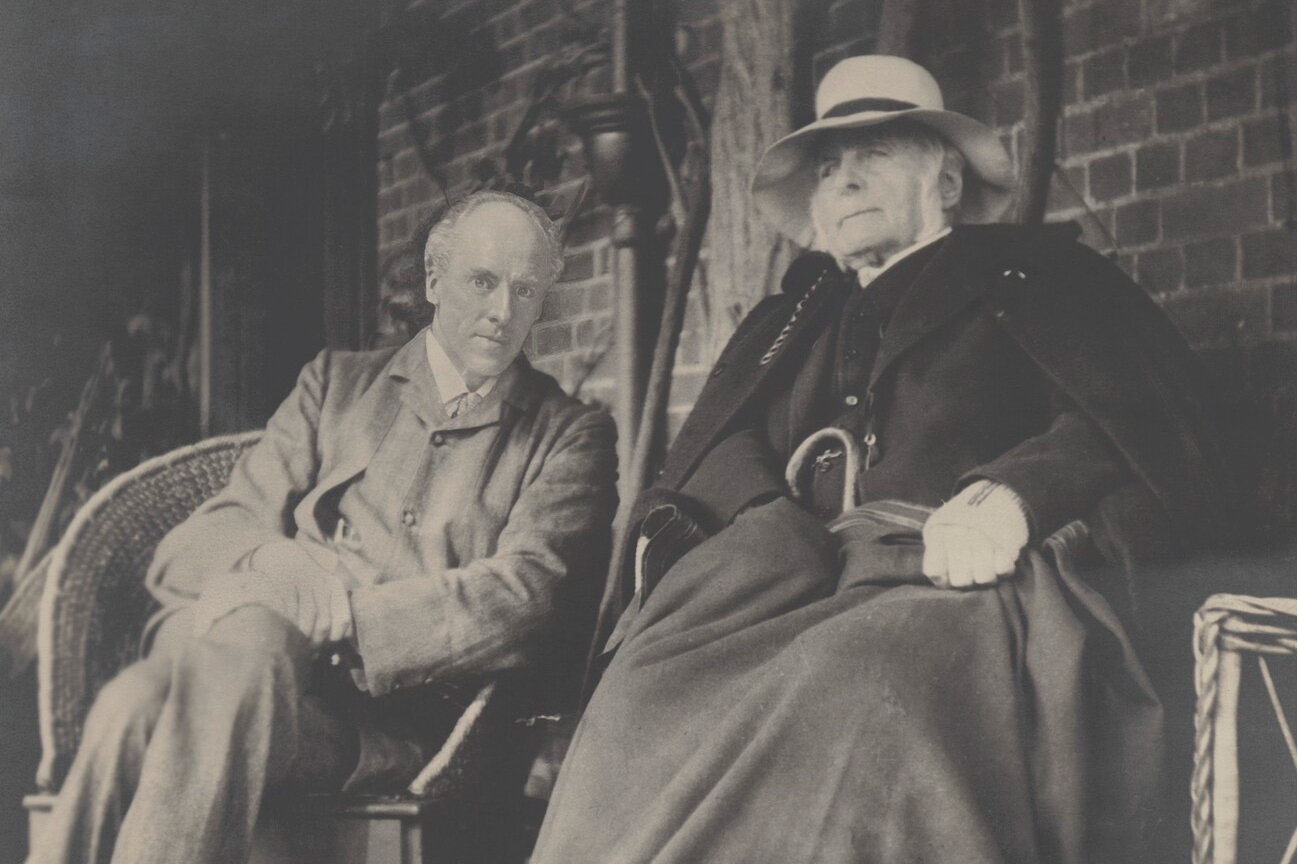
Karl Pearson (left) and Francis Galton (right). Source: Wikipedia

“Math is racist” is a phrase being circulated to criticize the anti-racist nature of the math curriculum. Boiling down complex ideas into a three-word slogan intentionally obscures the nuances inherent to any social issue. Mathematics, like all languages used to make sense of the world around us, was created by humans for humans. It is a tool with which to do things. Math is no more or less racist than a doorknob. However, it is the way in which mathematics has been used that is worthy of critique.

How has math been used to normalize racism? Here are some examples:

  • Statistics and eugenics: Francis Galton, Ronald Fisher, and Karl Pearson are the “Big Three” mathematicians that laid the foundation for modern statistical analysis. These three used mathematics and its perception of objectivity to further the eugenics movement of the early 20th century and justify white supremacist ideas and policies. Similar ideas using IQ testing continue to persist.
  • Algorithmic bias: Mathematical algorithms are used to automate calculations for risk, identify people’s characteristics, and predict behaviour. Criminal courts in America have used a machine learning program to assist in predicting the likelihood of re-offense by convicted criminals. It turns out that a 2016 study found that the program perpetuated our biases and rated Black people at a higher risk than White people.
  • Educational streaming: Mathematics is a gatekeeper for many post-secondary opportunities. Black and Indigenous students in Ontario are disproportionately placed in lower-streamed math courses, preventing them from accessing STEM programs in college or university and obtaining many high income-earning careers. This disproportionality both creates and perpetuates a subtle narrative that it is normal for Black and Indigenous students to not be good at math, and so rather than trying to remedy the situation, we can accept it and just make the most of it. The creation of a destreamed math course is meant to disrupt this oppressive norm.

Without a critical analysis of how mathematics has and can continue to distort reality, we end up increasing the odds that history will repeat itself in more insidious ways.

Mathematics can be used to address critical social and environmental issues

Mathematics has been used to inform COVID-19 vaccination strategies. Source: Ontario COVID-19 Science Advisory Table

It is curious that explicitly naming issues of social and environmental justice have been deleted from the curriculum. Without the use of mathematics as a tool to uncover social issues, the practice of police carding would continue to further damage Black and Indigenous communities across Canada, climate change would be even more out of control, and COVID-19 responses would not have (eventually) prioritized those in highest-risk neighbourhoods.

Also, perhaps the greatest irony of this deletion is that this government’s destreamed math course, a gem in their crown of anti-racism, is a direct product of mathematics being used to uncover systemic racism in education.

So now what?

Mr. Lilley notes, “Math hasn’t changed, though, and calling mathematics subjective, racist, and Eurocentric does nothing to help students who were left behind by the old curriculum.” If we examine who has been left behind by the old curriculum — disproportionately racialized students and students in special education — we see that how mathematics has been taken up in schools is somehow leaving specific groups of students behind, and we have been doing so for generations. We need to call out what is wrong in order to make things right. Mathematics does not get a pass on racial justice reform simply because it’s helped to make iPhones.

Governments have and should make changes to policies in response to new information. When research was highlighted to show how evaluating social-emotional learning skills would harm students of colour, particularly Black students, the Ministry of Education put a pause on the practice. In the case of these revisions, however, no new information has come forth. Rather, the highlighting of the mathematics discipline as one that is subjective and used as a tool to uphold racist ideas is the new knowledge that has been brought to the forefront. The removal of anti-racist principles in a math curriculum borne out of a desire to address anti-Black racism is blatantly contradictory and seemingly a knee-jerk response to the opinions of a select few. Perhaps more than anything, in a time when we should be centering the voices of those most impacted by anti-Black racism, this is what is most concerning.

Academic Streaming: Part 3 – Destreaming 101

Part 1 – Why It’s Just the Worst.

Part 2 – How I Started as a Streamer but then Saw the Light

Now that I’ve shared the importance of destreaming as an act of anti-racism and anti-oppression along with a personal journey to get to that thinking, here comes the part that most people probably just wanted me to fast-forward to:

How do teachers successfully teach an inclusive destreamed class???

Simple. It involves a battery, chewing gum, and a coat hanger.

Outdated ’80s references aside, effective teaching in a destreamed class can involve some Macgyver-like ingenuity with already-existent pedagogical tools. Because equity-centred teaching involves knowing the learners in a classroom, there is no prescribed set of instructions that I can share that will necessarily work in all environments. However, I will introduce approaches that are rooted in the discourse of inclusion, anti-oppression and destreaming. This is by no means an exhaustive guide, but I will say this is a good place to begin gathering research-informed ideas and start a professional inquiry on destreaming.

One last note: my teaching background is in secondary school math, so many of my examples will come from that angle. I also work with amazing colleagues who have destreamed English classes effectively so I will also draw examples from their work.

Be a culturally responsive teacher.

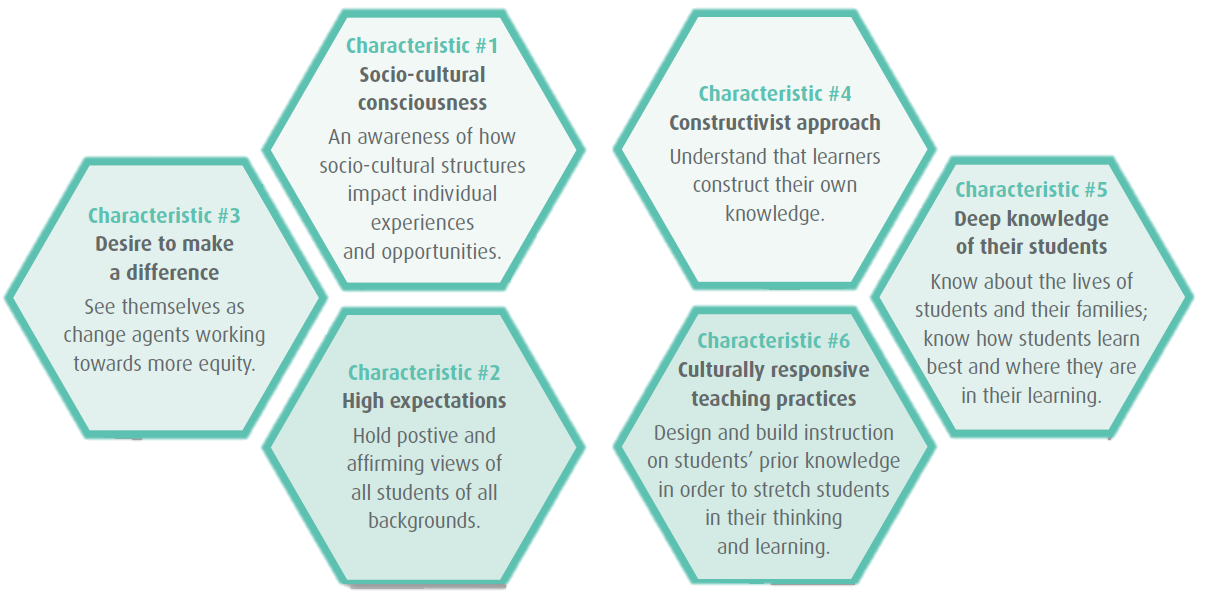
Culturally responsive educators have these mindset characteristics:

6 characteristics of culturally responsive teachers: socio-cultural consciousness, high expectations, desire to make a difference, constructivist approach, deep knowledge of their students, and culturally responsive teaching practices.
Characteristics of a Culturally Responsive Teacher (Ontario Ministry of Education).

To be an effective teacher transitioning into a destreamed environment, one has to realize that they are an active change agent in dismantling a harmful structure. They understand that not every student has had a privileged educational experience and seek to enhance equity in their learning space. When a teacher encounters challenges in their classroom, this goal serves as fuel to persevere.

No teacher will ever admit not to hold high expectations for students, but there are ways low expectations manifest in classrooms. Simply being satisfied that a student attends class but disengages all day because they face challenging life circumstances is one such example. Excluding some students from higher-level learning opportunities because “they need to sure up the basics first” is another example. Opportunities for critical thinking and problem solving are even more important for students that need to learn those skills. Peter Liljedahl’s Thinking Classrooms framework provides both the push and support that struggling learners need to help improve their thinking skills. Holding high expectations means providing the best curriculum, programming, and pedagogy for everyone, while expecting success from all students.

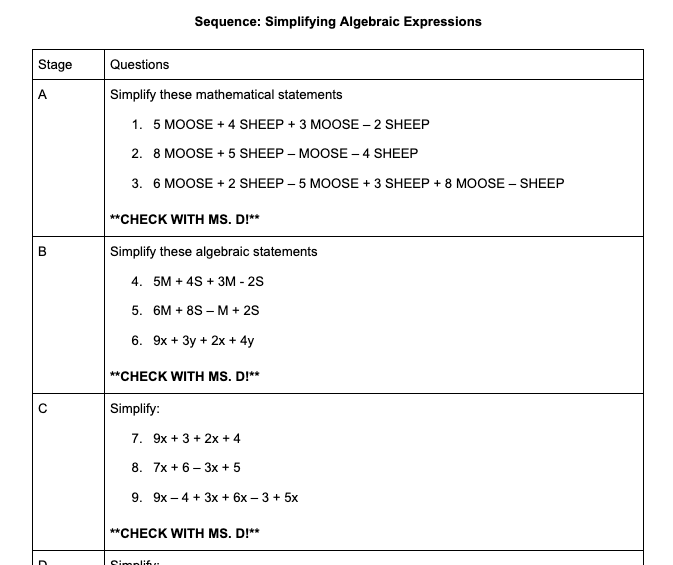
A successful teacher in an inclusive class also understands that students learn best by building on prior knowledge and constructing their own understanding. Below is an example of a series of questions that teaches students how to simplify algebraic expressions through sense-making. This not only validates the knowledge with which students bring to class, but it also promotes enduring understanding.

Sets of questions starting with adding concrete things like moose and sheep to adding algebraic expressions with different like terms.
Using strategic sequencing of questions to build understanding (Michelle Defilippis).

Finally, a destreamed class should provide opportunities for students to see themselves and issues that matter to them reflected in their learning. For instance, students can learn mathematics through relevant issues of social justice. MathThatMatters and High School Mathematics Lessons to Explore, Understand, and Respond to Social Injustice are great books to spark ideas for K-12 teachers wanting ways to infuse issues such as climate change and systemic racism into their math blocks. To ensure students have access to reading materials that reflect their identities and lived experiences, let them help with choosing the books that you or your school purchases for library collections.

Focus on inclusion through Universal Design for Learning (UDL).

Effective destreaming means thinking about inclusion, which involves reimagining learning spaces that are free of barriers to student participation, rather than fitting people into an existing space with visible and invisible barriers. Student variability of all kinds already exists in every classroom; how educators anticipate and respond to those differences will be even more important in a destreamed setting. Here are a few simple examples of what I have done to make my classes more inclusive, and where these examples fit along the Universal Design for Learning framework:

Engagement

  • Including student interests (ones that I have uncovered through having conversations) into math lessons.
  • Designing assessments that are short enough in length so that “extra time” fits into regular class time, and all students are entitled to that time, while also providing an independent activity for those that finish quickly.
  • Providing any homework I have planned at the beginning of class so students that learn quickly can begin practicing while I provide further explanations to those that need them.
  • Making available classroom tools and anchor charts and posting supplemental videos online.

Representation

  • Using visual (e.g. graphs and diagrams) and concrete representations (e.g. linking cubes, algebra tiles) as much as possible to illustrate abstract concepts.
  • Encouraging multiple ways for students to present solutions and having students make connections between solutions.

Action and Expression

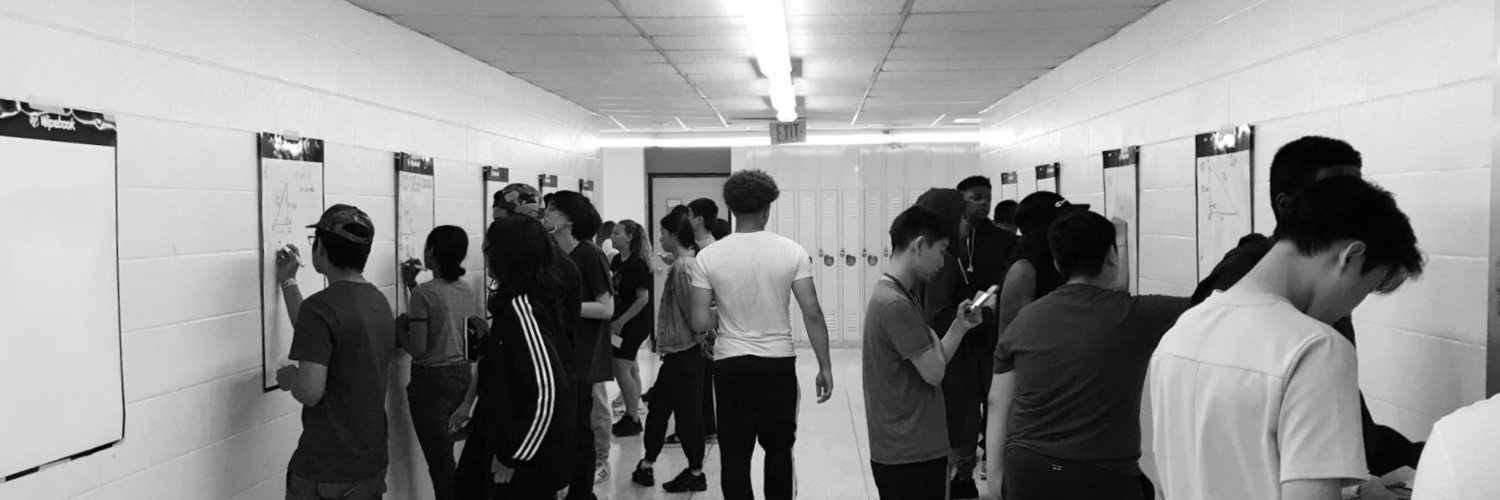
  • Solving math problems on vertical surfaces or at tables, in groups or individually.
  • Leveraging computer algebra systems to serve as assistive technology for students that have significant learning gaps in computational skills, but all students learn how to use them and can access them at all times in the classroom.

Better yet, combining the principles of UDL and culturally responsive pedagogy gives teachers an even greater base of knowledge about students to effectively plan inclusive learning spaces.

Differentiate instruction to meet particular student needs.

If UDL is about anticipating students’ needs, then differentiated instruction responds to them. When teachers are asked what their greatest concern is about teaching destreamed classes, most will identify the challenge of meeting the wide range of student readiness. Designing differentiated learning opportunities to meet students at their readiness level while creating a pathway for growth is a key element in any inclusive class.

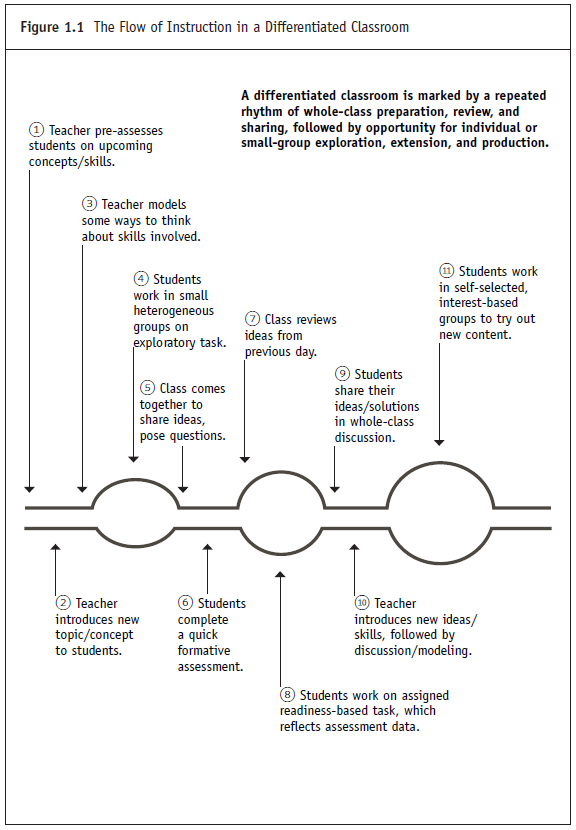
A prevailing myth of differentiated instruction is that a teacher must make individual lesson plans for each student or a group of students. In reality, differentiation involves an ebb and flow between whole-class and small-group/individual activities, informed by assessment.

A diagram that shows differentiated instruction moves between whole class and small group/individual learning opportunities.
The flow of instruction in a differentiated classroom (from “How to Differentiate Instruction in Academically Diverse Classrooms” by Carol Ann Tomlinson)

In my math class, I typically introduce a topic, have students in random groups try an open task with multiple entry points while I observe and guide, we discuss specific solutions as a group, and I consolidate the learning for the day. Mixed in there could be parallel tasks where I provide choice in questions of varied complexity but which focus on the same big idea. If I notice students struggling after the consolidation, I work individually or with a small group to try to quickly address misconceptions.

In Grade 9 English classes where students’ reading levels can range from Grade 1 to 12, studying a whole-class novel may not be the most effective approach. Teachers in destreamed English classes have begun to employ differentiated book clubs based on the work of Penny Kittle that allow students choice to access texts at their reading levels and meet their varying interests. Students still demonstrate proficiency in the overall expectations of the English curriculum with their chosen texts. Finally, more reading begets better reading, so students that are engaged in their choice of books greatly increase their reading volume and thus improve their skills exponentially.

Ensure your assessment practices are fair and equitable.

As teachers, we must inevitably place a judgement on how well students have achieved the overall expectations of subjects. Ensuring that assessment practices are fair and equitable must be a focus for any destreaming program to be successful. Let’s break down those two aspects:

Fair: Ontario’s evaluation system is mandated to be criterion-referenced, meaning that students are judged in reference to levels of the achievement chart that are standard across the province. This is in contrast to norm-referenced evaluation, which measures students to each other. The reality in many spaces across Ontario is that norm-referencing still prevails to some degree — Applied classes may have a lower bar set because students in those classes tend to be underachieving, while Academic classes may set the bar unnecessarily high as a means to invoke challenge. I do not for a moment suggest that the quality, richness, and “rigour” of learning opportunities should decrease in destreamed classes, but simply that the standard for judgements for reporting purposes must be reset so as to fulfill the criterion-referenced mandate of Ontario’s evaluation system.

For example, secondary students that show limited knowledge of content and use thinking, communication and application skills with limited effectiveness are still entitled to pass a course with a mark of at least 50%. Although you may not have faith in a mechanic with limited knowledge of cars or trust a surgeon who has demonstrated limited effectiveness, that level of unease is actually what is sufficient for students to accumulate credits and proceed on to the next course. In addition, how teachers assume a struggling student will perform in a subsequent course is not relevant when determining a grade for their current course. Teachers and school teams need to reflect on their assessment practices to ensure they are aligned with policy and are not unnecessarily holding students back from accumulating credits and proceeding on with their schooling.

Equitable: Not all students need to have the same number or types of assessments. Personally, I provide as many opportunities that students want and need to demonstrate the limited understanding they need to pass. I also take into consideration the observations and conversations that I have particularly with struggling students to get a more accurate sense of what they know.

Use pedagogy that’s actually supported by cognitive neuroscience.

Through his work on meta-analyses, education research John Hattie has shown that pretty much anything teachers try has a positive effect on student learning (TVs in the classroom and failing students are some of the rare exceptions). However, some strategies work more effectively than others and have evidence from cognitive neuroscience to back them up. Here are a few strategies that are worth mentioning in the context of destreaming:

Spiralling (or spacing, interleaving) is the practice of revisiting and relearning content after a length of time has passed. Spiralling offers multiple opportunities for the retrieval of knowledge from memory over the course of weeks or months, which helps to strengthen neural connections. I have been experimenting with spiralling in my math class, along with others, with positive results. An added benefit that I have found is that the first spiral consists of surface-level content and connections, which serves as a soft landing for Grade 9 students that are coping with a new school environment and entering with varying levels of math understanding.

Dual coding involves combining information in different forms, such as words with pictures, or descriptions of math relationships and graphs. Whenever possible, I incorporate images, diagrams, and graphs and link them to the verbal explanation. With all kinds of multimedia technology at our disposal, this strategy is easily employable. Dual coding and providing visuals and auditory modes is not to be confused with learning styles that has no scientific basis.

Active learning involves engaging in learning tasks rather than passively listening to a lecturer. Thinking through complex tasks involves more neural cross-talk and leads to greater neural connections. Although I would argue all teachers recognize the benefit of having students active during class time, some may still lean towards lectures in response to positive feedback from students. However, a recent Harvard study showed that while students feel they learn better during lectures, they actually learn more effectively when engaged in active learning. Also, with universities increasing their use of active learning approaches, such as the University of Toronto, University of Waterloo, Queen’s University, and Western University, successfully preparing students for post-secondary education necessitates deep learning and engagement.

Have a school-wide intervention strategy.

Even in the most inclusive and differentiated learning space, there may be some students that require additional intensive support to achieve success.

A concern amongst teachers in destreamed classes is a struggling student’s reading ability. By high school, a student should be reading to learn, but what if they still need help learning to read? The Right to Read program that was launched at Runnymede Collegiate Institute in Toronto and since replicated in other schools has shown that targeted one-on-one support for a few weeks can lead to a year’s worth of reading gains or more (here is a TDSB report with methodology, case studies and recommendations).

Schools in the TDSB have also begun to experiment with a transitional math course in the first semester of Grade 9 for students that significant learning gaps. To prevent such a course from being yet another streaming structure, placement should require intentionality and oversight, and all students must also enrol in Academic math for the following semester. The course content differs from school to school, but teachers have highlighted the need to develop students’ number sense in order to best set them up for success in subsequent math courses. Even with a new destreamed math curriculum on the horizon, a transitional course may be still required.

Destreaming the educational system by altering the structure alone will not lead to the desired effects of removing systemic barriers for Black, Indigenous and other marginalized students — in fact, evidence suggests it would likely exacerbate societal inequities. Meaningful pedagogical shifts and intervention supports, backed by human and financial resources, must accompany the structural changes. Effective destreaming is not easy work, and progress may not be linear, but we owe the marginalized youth of Ontario our best collective effort to reset the educational system and bring about real and substantive change.


Kudos to the educators whose work I’ve drawn upon for this post: Kulsoom Anwer, Rachel Cooke, Michelle Defilippis, Stephen Dow, Sean Henderson, Ramon San Vicente, Reshma Somani, Leigh Thornton, Sylvie Webb.

Academic Streaming: Part 2 – How I Started as a Streamer but then Saw the Light

Part 1 – Why It’s Just the Worst.

Part 3: Destreaming 101

“Saida, I really think you should to go to Applied math.”

Even just thinking about my comment to this Grade 9 student years ago still makes me cringe. I remember it so vividly. We were standing outside the math office between periods at Westview Centennial Secondary School where I was the head of math. Saida was wearing a bright yellow hijab and holding her coiled Hilroy notebook and textbook on her hip. My back was facing the office door, and my shoulders were slightly hunched over, anticipating that she’d get upset over what I was suggesting.

After I said my piece, Saida shook her head and looked away. She made a face that clearly demonstrated disapproval, turned around, and slowly walked away from me.

Eventually, after a conference with Saida’s mother, she did transfer to Applied math. I felt that I was selflessly doing her a favour by moving her to a class where she could attain a feeling of success, while also absolving her of her unrealistic dreams of becoming a doctor. In hindsight, I was doing myself a favour, relieving me of both a burden and a feeling of failure.


Weeks afterwards, I received an email welcoming me to a professional learning series that the organizers titled Sifting, Sorting and Selecting: Rethinking Streaming in TDSB Schools. As the math lead, I was expected to attend. Even after reading the introductory email, I honestly had no clue what this PD was for.

What’s streaming? And why do I have to rethink it?

At that early point in my career, I had a pretty strong but unrefined equity lens. I did my teacher education through OISE’s Inner City Education Cohort, and I began my teaching career in northwest Toronto. When I was offered a position to be a school leader at Westview, the heart of the Jane and Finch community, I couldn’t resist the opportunity. I wanted to make a difference.

In the case of Saida, along with likely many other students up until that point, I didn’t know that sometimes I would be making the wrong kind of difference.

What transpired over the next few months through Sifting, Sorting and Selecting was nothing short of my mind being blown and my self-conceptions as an educator irreversibly shaken. I often refer to this as my red pill moment. I learned about power and privilege, how my own identity shaped how I taught and for whom I taught, factors that actually impact student achievement and realizing that almost all of them were, to varying degrees, within my control. I analyzed demographic data from Gillian Parekh’s seminal report on streaming and how these streams not only perpetuated societal inequality but could actually be exacerbating them. I saw the potential of alternative models of schooling, like one piloted in Limestone District School Board. I heard from Carol Burris, then a school leader in a New York district that ended streaming, invested in teacher learning, and saw incredible academic gains for their Black and Latino/a populations.
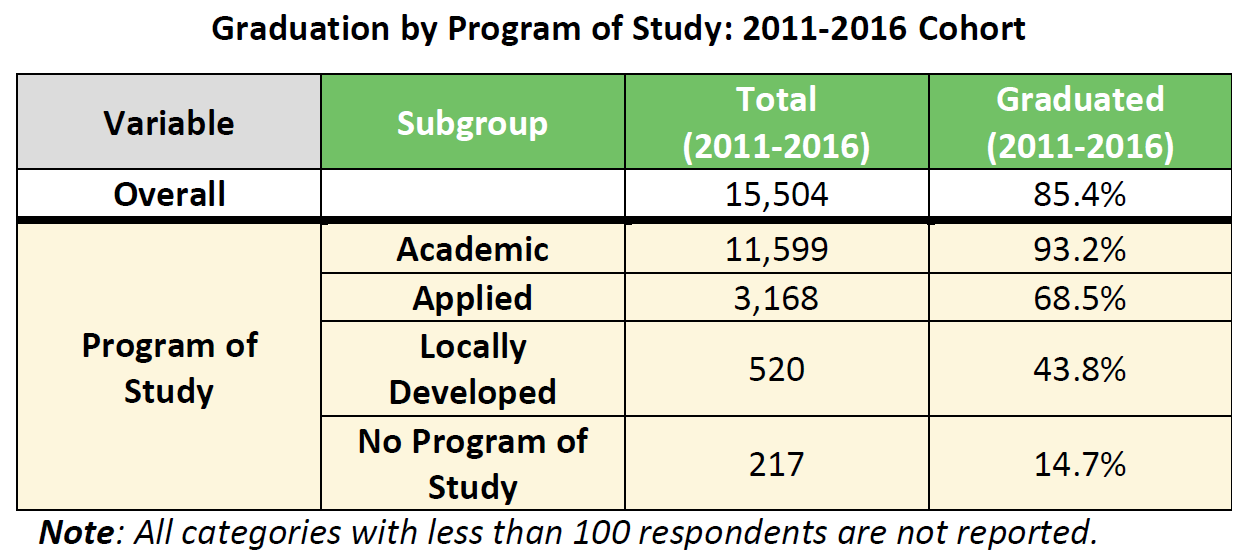
After this mind warp, myself and my Westview colleagues drew up a plan to destream Grade 9 English and math (yes, this grand plan was hatched using a Crayola marker and chart paper):

Westview’s initial thinking of “destreaming” Grade 9 English and Math classes.

We had a will. And we had a way — sort of. What we knew for sure, however, was that the status quo could no longer be upheld and that we needed to change course. We were all willing to learn more to make destreaming viable and successful. The next year involved professional inquiries: differentiating instruction to respond to varying student readiness, offering culturally relevant texts and plays, and teaching issues of social justice and providing open questions and parallel tasks in math. The specific strategies are not the point here (that’s really for Part 3). What matters is that we teachers really wanted destreaming to work and were enabled by our school administrators to try new things and take risks in our practice.

In a span of five years, I went from being a teacher who actively pushed students out of Academic to relishing the opportunity to include students into my Academic math classes that were previously excluded, such as those identified with a mild intellectual disability. It all began with a mindset change, sustained by a motive to be an anti-racist, and refined over time through ongoing learning and inquiry. To me, that’s the secret to being a successful teacher in a destreamed system. I am not a perfect teacher by any means, nor do I ever expect to become one. I do, however, expect myself to continually be better, because inclusion and anti-oppression are not static events, but rather a constant process of building and re-building.


On a June Monday, Ontario Premier Doug Ford gave his take on racism in Canada compared with that of the United States, saying that “We don’t have the systemic, deep roots they’ve had for years.”

Perhaps after an explanation from experts within his inner circle, he acknowledged three days later that “We have our own history of racism here in Ontario and it’s been going on for decades.”

A month later, Ford announced his government will end academic streaming in Grade 9 across the province, noting it as a form of systemic racism: “We are the only province in the entire country that does this and it really is not fair to certain groups of students.”

That red pill, Mr. Premier, is something else, isn’t it?


Shout-out to the Sifting, Sorting and Selecting team members: Ramon San Vicente, Alison Gaymes San Vicente, Diane Dei Amoah, Cristina Guerrero, Tracy Williams-Shreve, Amita Hamda, Kevin Sutton, Sandra MacInnis, and John McPhee. Read their report here.

More shout-outs to the Westview team that hatched the destreaming plan on chart paper and blue Crayola marker: Rosalie Griffith, Nastassia Subban, Saraya Elwin, Nalinee Dindial, Pamela Townsend, Cherilyn Scobie, Bruno Berto, and Charmine Gayle-Bonner

Academic Streaming: Part 1 – Why It’s Just the Worst.

Part 2 – How I Started as a Streamer but then Saw the Light

Part 3: Destreaming 101

Academic streaming in schools, which is the practice of separating students into different educational pathways based on perceived characteristics like academic readiness and potential, is now a front-burner topic since Minister Stephen Lecce announced that Ontario will end streaming in Grade 9, recognizing it as a form of systemic racism in the education system.

Donald Lewis shared his story of how streaming impacted him from as early as Grade 2 to the Coalition for Alternatives to Streaming in Education. You can watch the video here.

So exactly why is streaming a problem? Here’s the skinny. Compared to students who take the majority of courses in the Academic program of study, those from the Applied stream are:

  • greatly underachieving academically: For example, on the Ontario Secondary School Literacy Test — a minimum-competency assessment — 92% of students in Academic English meet the provincial standard vs. 44% of students in Applied English from 2015-2019.
  • much more likely to be suspended: According to data from the Toronto District School Board, students in Applied are approximately four times more likely to be suspended compared to students in Academic classes (7.1% vs. 1.8% in 2011-2012).
  • far less likely to graduate: 93.2% of TDSB students who took mainly Academic courses graduated within 5 years vs. only 68.5% for those who took mostly Applied courses (2011-2016 cohort)
  • less likely to enter post-secondary education: For the same cohort, 81.2% of students from Academic courses confirmed a university or college acceptance vs. 47.5% of students from Applied classes. Another grim statistic is that only 3% of students that take Grade 9 Applied math entered university.

What makes these facts even worse is who is being placed into the Applied stream. Data from Toronto (which should be similar to those in other diverse communities) show that Black and Indigenous students, students from low socioeconomic backgrounds, and students identified with special education needs (excluding gifted) are overrepresented in Applied classes.

So to recap, the education system is placing our most marginalized and underserved youth into a pathway that is far less effective in educating them than the one in which we put more privileged students. Applied courses were originally designed to support those who wanted more hands-on learning experiences and to learn practical, rather than abstract, concepts. Instead, they became spaces of lower expectations, poorer learning environments, and fewer post-secondary opportunities for students that need the exact opposite.

Some might argue, “Of course Applied classes don’t do as well because the kids in there already struggle in school.” The fact is that if Applied courses are meant to support students that struggle, then they do not do a very good job of that, seeing as the majority continue to underachieve and do not continue their education after high school. And those that do tend to struggle in college. A report by the College Math Project in 2011 showed that close to 50% of students who took college preparation math in high school were at risk of failing math in college. Take that in for a moment.

Others might say, “It’s their choice to take Applied courses.” Not exactly. Carl James and Tana Turner documented numerous examples of teachers and guidance counsellors discouraging Black students from taking Academic courses, pressuring them to take Applied, and actively keeping them from applying to universities. On social media you can read story after story after story of this happening. If you have access to the National Film Board, watch Invisible City by Hubert Davis and fast-forward to 20:20 to watch this process go down in real time. These are not isolated incidents. They form a trend of well-meaning yet subtly oppressive acts that some students successfully fend off, while others stay trapped and kept down.

Even if students did choose Applied classes out of their own free will, they do so without all the information. Social Planning Toronto found that Grade 8 students based their next year’s course decisions on incomplete and sometimes contradictory information. The report states that “some students are unknowingly following a path which inhibits them from reaching their full potential.”

All of this research, data, advocacy work and stories — along with a seismic shift towards examining systemic racism sparked by George Floyd’s murder — have brought us to this point where the Ontario Ministry of Education announced that they will begin to do its part in eliminating barriers to equality. More naysayers will go, “With destreamed classes teachers will just have to lower the bar” or “When teachers teach to the middle, the smart kids will be bored and the ones who need help will be lost.” I will address these quips in Part 3 of this series, but for now I’ll just say that truly successful educators know how to reach a wide audience.

Finally, the last of the buzz-killers will say, “This can’t just be the responsibility of high school teachers!” To that I would give a physically-distanced bro nod to these people and say they’re absolutely right. Streaming can begin as early as kindergarten, and possibly even preschool. Through biased perceptions and unacknowledged brilliance, many racialized students will be seen by the education system as not fitting a prescribed norm, treated differently than others, shunted to the group at the back, given special education labels, modified to meet lower expectations, and exit elementary school with significant learning gaps. This narrative is why dismantling streaming is the responsibility of the entire school system, not just high school teachers. Elementary teachers and schools need to critically interrogate their own practices and structures to see how they might be perpetuating societal inequities.

If destreaming were easy, we’d have done it by now. This process will take time, struggle, pain, and a long hard look in the mirror. Effective large-scale change never happens overnight, but this process needs to begin immediately. Do not wait for the time when destreaming becomes mandatory. Begin the process now. Read this book. Watch this video. Talk to colleagues. Start a plan. Because even if the Ministry of Education backtracks for whatever reason, the fact will remain that streaming is still a recognized form of systemic racism. How educators decide to move forward will be both pivotal and telling.

I say all these things not from an “I’m better than everyone” stance, because I totally used to love streaming. I’ll save that story for tomorrow.

Math Education as Social Empowerment

After a wild ride working centrally in the Toronto District School Board, I’m heading back to the classroom at Westview Centennial Secondary School in Toronto’s northwest and looking forward to putting in action all that I have learned over the past three years. I hope to keep up a short weekly blog now that the work life will be (somewhat) more predictable! These blogs will be mainly my reflections, a-ha moments, soapbox-type rants, sharing of insecurities and other stuff I’d like to share.

IMG_4592

Right now, I’m in the middle of teaching summer school with students that didn’t get a passing grade in their regular day school math class. I asked them all why they didn’t pass the first time around, and the answers varied from external factors (“my teacher and I didn’t get along at all”) to internal reasons (“I just gave up because it was too hard”). For me, when I see students that haven’t been successful in math, I feel that they’re at risk of being less powerful than those that are successful in math class. Yes, math is power.

Think about it: those that can do math well are the ones that have greater access to high socioeconomic status STEM fields including medicine, engineering, digital information management, etc. Doing well in math and taking higher-level math courses is also related to being able to enter non-STEM programs in colleges and universities, many of which involve taking some kind of statistics course anyway. It also impacts one’s personal identity as it relates to math. The “I’m not a math person” label, even though there’s no such thing, is often internalized after traumatic experiences with learning math and holds people back from activities like helping their children with learning math at home or, in the case of some teachers, teaching math confidently in the classroom. Finally, students that have historically not been serviced well in terms of math education are from low-SES backgrounds and who stand to gain the most from high-quality math learning.

That’s why teachers of math, whether they’re in an elementary or secondary setting, need to view what they do as a form of social empowerment. It is not just curriculum expectations that teachers check off and see merely as obligations to their day. Math is powerful enough to shape people’s lives, and that’s not an exaggeration. If we view it with that type of urgency, teachers would keep the bar high for all students, make sure that those that are struggling receive all the help they need, adjust their teaching practice if something’s not working in the classroom, and connect the mathematics to students’ lives. I’m approaching summer school this way — I’m on a mission to help students with (re-)empowering themselves with math knowledge and critical thinking experience so that they can be better prepared as citizens in a 21st-century context that is increasingly mathematical and problem-based. That’s what’s been keeping my engine going all week — and will all month — with these students that deserve to be good at math.

Setting Higher Standards: High School Graduation Just Isn’t Enough

“If you can’t measure it, you can’t improve it.”

– Peter Drucker

Not long ago, I was part of a meeting with math teachers and school administrators that involved identifying students that were struggling. The benchmark for “struggling” was failing with a grade below 50%. Although these students definitely deserve increased attention, why was 50% the bar that was set and not the Ontario provincial standard of Level 3, or an equivalent to a “B” or 70%? Is our goal just to pass students, or is it for them to achieve at a level that will set them up for success down the road?

My guess is that the primary measure that is given to school staff that relate to student course achievement is the pass/failure rates. Other measures, including the percentage of students that achieved the provincial standard in courses, are likely not as readily available nor distributed.

In a similar vein, the Toronto District School Board (TDSB) recently shared that the graduation rate, now at 86%, is the highest it has been since tracking began in 2000. Again, this is deserving of attention and a noteworthy accomplishment, but should our goal be to simply have students graduate, or to ensure they take the next step to post-secondary education?

In today’s job market, a high school diploma is pretty much the equivalent to a participation ribbon. As the job market demands more skilled workers that attend some form of post-secondary education (college, university, apprenticeships, etc.), and knowing that income is higher for those with post-secondary education vs. a high school diploma alone, we need to work towards ensuring students are set up well to enter and thrive in education after high school, and we need to measure this and make the data well-known.

Enter some really savvy TDSB research folks…and me just regurgitating their great work.

If you know me at all, you’ll know that I talk about streaming structures in education ad nauseum. These structures dictate, to a large extent, access to and success in post-secondary education. In Ontario, high school students take courses in three streams: Academic, Applied and Locally Developed, which are designed for students to access university, college, and the workforce, respectively. In a perfect world, students from all three streams should graduate and be successful at an equal rate. But, this is not a perfect world and it is littered with imperfect systems.

In these three streams, there are clear disparities in graduation rates, as shown in the data pertaining to the student cohort of 2011-2016 in the TDSB:

Graduation by POS

Students who take predominately applied and locally developed courses are not graduating at the same rate as those taking mostly academic courses. However, as mentioned earlier, access to post-secondary education is becoming increasingly more crucial. So what does that data look like across streams?

PSE Confirmations by POS

After five years of high school, more than four out of five students (81.2%) who took predominantly academic courses received a confirmation of post-secondary education. However, less than half of students (47.5%) in the applied program of study attended post-secondary education, and less than 15% of students in the locally developed program access schooling after graduation, with almost none accessing university (0.6%).

Focusing more on the disparity between academic and applied pathways, it is alarming that while both are designed to access post-secondary education, one is clearly much more successful than the other at that goal. What is more troubling is that students in the applied program of study, many of whom are not directly entering college or university, are disproportionately students from racialized backgrounds, those from lower socioeconomic backgrounds, and students with special education needs. If this doesn’t eat away at your conscience, go to your doctor and ask them to check for a pulse.

Organizations conduct and report on measures to determine if targets are met. I argue that we need to report on and be accountable to different targets to ensure that our eyes are on the right prize. Specifically, we need to ensure that our students are not just passing at a 50% and then graduating high school, but they are also meeting or exceeding provincial standards and accessing post-secondary education. As the saying goes, “you are what you measure.”

This is mainly why the TDSB has made a commitment to challenging streaming structures to improve success for all students. Along with that structural change, educators in schools need to understand that this shift is a response to the inequities that we see in access to post-secondary education and who is disproportionately affected by streaming structures. We must set high standards for all students, but just as importantly, we must set high expectations and the right targets for ourselves as educators and the systems in which we work. 

Another Internet post dissecting the troubling EQAO math results and the state of math education as we know it…

EQAO Results

*Record screech* *Freeze frame* Yup – that’s us. You’re probably wondering how we got here. Well, let’s start from the beginning.

Okay, we’ll start in 2009 instead, when math assessment results from the EQAO began trending downwards for our elementary students, and people — educators, parents, and anyone who cares about the future of society — are getting frustrated. There’s a lot of mudslinging, finger-pointing, and general crankiness. Understandable, but let’s take a deep breath. There’s not one single reason why this is happening, but rather there are a lot of contributing factors.

Discovery vs. back-to-basics

There’s this never-ending (and often misrepresented) saga between “discovery math” and “back-to-basics” approaches to teaching. Many experts agree that there needs to be a combination of individual sense-making and skill practicing to best support students’ conceptual understanding and fluency in math facts. Using one approach over the other exclusively will produce incomplete thinkers. This discourse on the false dichotomy between the two approaches only hurts our students and puts them in the cross-fire.

Teachers’ confidence in math

Many elementary teachers are struggling to teach math. That’s not their fault. Their job descriptions ask them to be generalists and able to teach pretty much everything. School boards, however, have not emphasized the need for incoming teachers to be specifically skilled in teaching math. According to Dr. Mary Reid, assistant professor at OISE, four out of five elementary teachers do not have post-secondary mathematics education (of course, having that doesn’t automatically make you a stellar math teacher, either). I don’t have an answer to what amount of formal math education is needed for teachers, but there is something to be said for knowing the math well enough to teach it; otherwise, teacher anxiety kicks in, and that doesn’t bode well for students. Again, that’s not teachers’ fault. It’s just what the education system has allowed to happen.

Students’ confidence in math

Students aren’t overly confident about their math skills, either, especially females. According to the EQAO, there’s a noticeable drop in female students’ self-efficacy about math compared to reading and writing — 45% of grade 6 females think they’re good at math versus 71% and 51% for reading and writing, respectively — and their assessment results reflect that drop. Having said that, male students don’t see themselves as good writers — only 35% of grade 6 males think they are — but nonetheless seem to be meeting writing expectations at a decent rate (73%). So, confidence is part of the equation, but not all of it.

Struggling students aren’t better off separated

Generally, how we treat struggling learners is only making things worse. What typically happens when students don’t meet math learning expectations is they are given below-grade level questions, exposed to more structured and rote learning of the “basics,” and separated from students (either to a different table, classroom or course altogether) that are doing fine. Time and time again this type of ability grouping has been shown not to benefit struggling students. On top of that, these practices further marginalize students from racialized groups and lower socioeconomic backgrounds and those perceived to have a disability. Organizations in the United States, including the National Education Association and the National Association of School Psychologists, as well as People for Education in Ontario, have called for an end to these types of practices. Many studies conclude that heterogeneous groupings benefit struggling learners without disadvantaging advanced learners. Finally, there’s also a great deal of evidence to show that struggling students benefit most from complex problem solving, open-ended questions and focusing on the big ideas, rather than burying them in repetitive worksheets.

The math curriculum could use a freshening up

The last time Ontario’s math curriculum was reviewed, Paul Martin was the Prime Minister of Canada, Twitter was still just an idea, and We Belong Together was Mariah Carey’s gift to humankind. The overall philosophy of the curriculum still works, but the details need some calibration after twelve years. For instance, I feel there should be a greater emphasis in and support with connecting mathematical concepts and teaching as many with a cross-curricular approach (this is already in the front matter of the curriculum documents, but how many people read that, really?). Making math relevant and creating interconnections between ideas are essential for lasting learning. Digressing a bit to high school, statistical literacy and critical thinking need to be emphasized in the world of “fake news” (SAD!). However, many students’ explicit exposure to statistics will end in grade 8 — students can navigate through high school math courses without seeing a bar graph (and then they’ll get fooled by shenanigans like this). Finally, financial math doesn’t really play a big role in senior university preparation courses, which is taken by the majority of students in grades 11 and 12. Is that why more and more young Canadians are going bankrupt?

So what’s there to do?

We all have a hand in making things better. IMHO:

Ministry, school board, and policy folks could…

  • Adjust the curriculum so teachers can focus on big ideas and connections between concepts and subjects. Also, emphasize skills that are needed for an informed citizenry, including statistical and financial literacy.
  • Promote inclusive education and monitor implementation so that struggling students learn in environments and ways that actually support them.
  • Support teachers with math knowledge for teaching, effective math pedagogy, a balanced math program that emphasizes both understanding and fluency, and differentiated instruction so high-fliers can become the next Srinivasa Ramanujan or Katherine Johnson, while others can continue to develop their math understanding to become knowledgeable adults.
  • Continue with the Renewed Math Strategy, particularly its focus on supporting students identified with special education needs and developing math knowledge for teaching. These investments take time to pay off, so let’s not pump the breaks.

School-based folks could…

  • Build students’ confidence in math: give high-fives for trying hard and not for the right answer, value process and not speed, find something genuine to praise when a student works on math.
  • Make math so freakin’ cool: Play math games, do math puzzles, make math jokes, sing math songs, do math handshakes (okay, they’re nothing to do with math, but you get the point), link math genuinely to students’ lives as much as possible.
  • Continue to learn math as part of professional learning, either formally or informally. Get a staff math group going, and have an administrator participate to show that it’s okay for teachers not to know the math yet but can work on it.
  • Resist the temptation to separate students that seem to be able to do math from those that seem to be struggling. Use alternate strategies so they can be engaged and receive support while also learning with and from their higher-achieving peers.

Families could…

  • Find the math in everything we already do with our kids (e.g. walking down the street, cooking, shopping, playing board games). Get kids wondering mathematically about as many things as possible, and then praise the heck out of them for being math wizards.

This math problem we got ourselves into has many moving parts, and hence many actions from a variety of stakeholders are needed to dig our kids out of this hole. Let’s stand up, do a Walmart-like cheer, and get on with it.

The names we (don’t) remember

Guacamole

I’ll bet that I’m not the only teacher on the planet to forget students’ names years after I taught them. I wish I could remember everyone’s name, like Bill Clinton does, but no matter how much effort I put into it, it’s gone pretty quick. It could be because, well, I’ve taught a lot of kids. In my eight-ish years of doing this teaching thing, I’ve probably taught close to a thousand students, which sounds like a lot until I think about folks who have taught for waaaaaaaaaaay longer than I have. The students whose names have completely escape me have been some of the best and brightest students I’ve ever had the pleasure to teach, but five years later it’s “Hey…you” when I happen to run into them on the street (I’m lucky if I bump into them while they’re working retail, in which case I coolly and nonchalantly check their name tag and try to pass it off that I’ve remembered them so well after all these years).

However, for some reason, that didn’t happen when I ran into Steven (a pseudonym), a student I taught about six years ago. I was walking in my neighbourhood with my head down, daydreaming about unicorns or something, when a voice suddenly said, “Do you remember me?” Of course, at first, I didn’t, but then after he named his high school, his name miraculously came to me, and when I said his name, Steven cracked a huge smile, like I’ve validated him somehow. I even remembered his brother’s name, Billy (also a pseudonym) and we got to chatting for a few more seconds before we parted ways. Steven wasn’t the greatest student, and neither was his brother, whom I also taught. They were more likely to be in trouble than engaged, more into chatting than algebra, but I remember feeling that deep down, they were good people but just grew up in a rough situation.

After my chat with Steven, I wondered why I remembered his name when I’ve embarrassingly forgotten other students’ names in the past. And that’s when I came to the conclusion that it’s probably because he and his brother were part of one of my fondest memories as a teacher. One math class, I decided to teach proportions and fractions through cooking. It had been a tough go with this group for a while, and my prior lessons weren’t exactly the most fun and practical either, so I thought maybe doing something hands-on and fun to shake things up would provide a spark. I decided to make guacamole with the class – easy to make, no need to heat anything, and it’s a crowd-pleaser. I gave a recipe out and my students had to scale it up. When my students realized that we were actually going to make something and not just scale up the recipe for the sake of doing it, they got excited. Kids got up and were chopping, cutting, measuring, mixing, and eventually, eating. The lesson wasn’t super-awesome by any means, but for whatever reason, my students responded in the way that I had hoped. Billy had such a good time, he was walking out to the hallway telling everybody who bothered to listen that we made guacamole, all while holding a plate with chips and mashed up avocadoes. Steven eventually came to the class to visit Billy, and he thought it was pretty cool, too, and both of them looked giddy in a way that I hadn’t seen prior to that, and I was glad that I was able to make a positive connection with them that day.

I suppose I remembered Steven’s name not because of all the math we did, but rather because of how he made me feel while we ate guacamole that his brother helped to make. Making an impact is really about making a connection. If I can’t remember names because I haven’t made enough of an impact with students, or don’t have a memory with them that stands out, then I need to do something about that and make sure that I find opportunities to make those kinds of memories and connections with students.